From the classroom to the constitution: three scholars on putting African languages to work
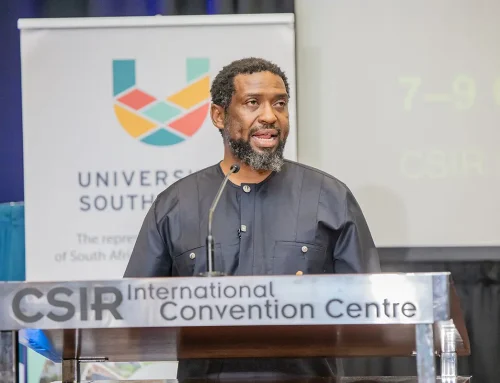
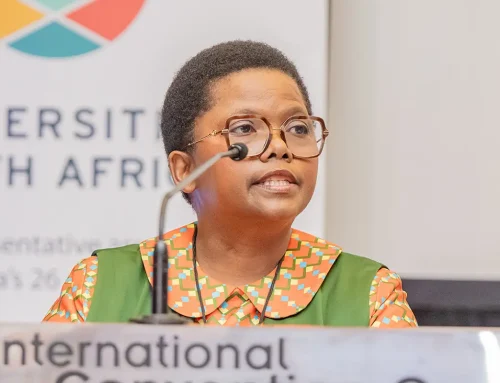
If Professor Leketi Makalela’s keynote set out why South African universities need to teach through African languages, the three conversation starters that followed at the Community of Practice for the Teaching and Learning of African Languages (CoPAL) meeting in Johannesburg on 24 June 2026 showed what that looks like in practice, and how much harder the thinking still has to go. Dr Xolisa Guzula spoke from the classroom, Dr Lorato Mokwena from the concepts underneath it all, and Professor Quentin Williams from the case of a language most policies do not even name.
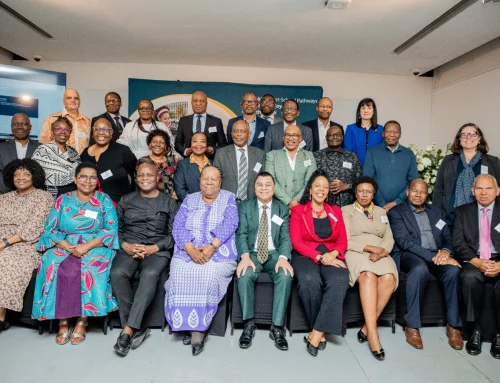
Chaired by Professor Nobuhle Hlongwa, with Professor Lolie Makhubu-Badenhorst as deputy, the meeting used the three talks and the plenary that followed to move from principle to method, and then to the awkward questions that method throws up: how to assess bilingual work, how far to develop a language, and who gets to decide what a language even is.
Xolisa Guzula: building the practice and the materials
Dr Xolisa Guzula, a senior lecturer in applied language and literacy studies at the University of Cape Town, opened by placing herself firmly within Makalela’s frame. Her work, she said, sits inside his Ubuntu translanguaging approach, and she was glad he had done the theorising first so she could get to the practice. She was also careful to present the work as a team effort, drawing on her own past teaching in UCT’s Postgraduate Certificate in Education (PGCE) and on the current work of her colleagues Professor Carolyn McKinney and Dr Soraya Abdulatief. That framing carried a point Makalela had also made: multilingualism is not only the lecturer’s business. Her colleagues do not speak isiXhosa or isiZulu. Yet their teaching seeks to dismantle the excuse that a lecturer who does not speak an African language cannot promote multilingual education.
Much of her own teaching, she explained, began by decolonising literacy through African storytelling. Because school literacy tends to treat reading and writing as superior to orality, she trained her students to bring the storytelling, singing and rhymes that children already know from home back into the classroom, and to build a visible bridge from oral story to written text: tell a story today, write it tomorrow, read it the day after. Working with art lecturer Jill Joubert, her students made bilingual and trilingual books, choosing for themselves whether to mix languages in a single text or keep them separate, and whether to carry the narration in one language and the dialogue in another. They also made puppets and “theatre in a box,” which they performed for children at a Waterfront museum, with the instruction that every song or rhyme come through more than one language.
The discipline in all this, she stressed, is that multilingualism has to be built into the assessment rubric, so students cannot avoid it: multilingual word walls, personal dictionaries, grammar taught across two languages, and books that show the languages on the page. In the current high-school PGCE, her colleagues model the same approach, teaching a course on language and literacy development in multilingual societies with bilingual slides and inviting students to respond and translate in their own languages. Students working in method groups, from natural science to history to music, produce multilingual posters, and the team analyses the results, noting, for example, that pupils and student teachers still tend to start with English before the African language, something they aim to reverse.
Guzula also pointed to a growing body of published materials her team has produced: a five-language history book, Together Apart, on life under apartheid; the Imbokodo series on thirty women from the 1800s; and science non-fiction titles on the solar system and the moon, written with Room to Read and colleagues at the University of the Free State. Much of this classroom work is now documented in Reflections on Multilingual Teaching and Learning Practices, a booklet published by UCT’s Faculty of Humanities through its Multilingualism Education Project, to which Guzula is a contributor. On mother-tongue-based bilingual education, she reported that her team had trained 60 Western Cape teachers in November and a further 90 in March, using a bilingual course reader. She was honest about the resistance that remains: even students who call for decolonisation have been habituated to a monolingual mindset and have to work to affirm their own multilingualism.
Lorato Mokwena: questioning the concept itself
Dr Lorato Mokwena, a sociolinguist at the University of South Africa, deliberately turned the lens back on itself. Where the first two speakers had shown the work, she asked the meeting to sit with something uncomfortable: what do we actually mean by “language”? She offered a plain disclaimer up front. For anyone whose life’s work assumes that language, identity and ethnicity are biological facts, she said, the argument might be unsettling. She was not questioning that work, or the community’s, but asking everyone to examine assumptions that have been sold as facts.
Her anchor was Sinfree Makoni and Alastair Pennycook’s book Disinventing and Reconstituting Languages, which argues that languages, and the very vocabulary we use to describe them, are inventions, tied historically to Christian, colonial and nationalist projects. If a language is an invention, she reasoned, then it has inventors, and inventors have agendas, so no language can be assumed to be neutral. One consequence is the habit of treating languages as separate things that can be counted. South Africa has counted twelve and written them into its constitution. The problem, she argued, is that separating the languages implicitly separates the people: to give official status to nine indigenous languages in that way risks reaffirming a false separation, linguistically and ethnically, that echoes the logic of the bantustans.
Mokwena distinguished de jure policy, the law as written, and de facto policy, language as actually lived, and argued that the two do not match: the societal multilingualism of South Africa does not align with the constitution. Her challenge, delivered through a story about being asked “what are you?” by someone who could not accept a mixed heritage, was that the country’s obsession with neat categories runs deep and shows up in its language policies. If languages are inventions, she concluded, then they can be disinvented, and communication reconstituted to reflect how people actually speak. Language, in the first instance, was meant for communication. Tying her argument back to Makalela’s Ubuntu, she suggested that “I am because you are” only works when we recognise one another past race and class, through the shared human need to communicate.
Quentin Williams: Kaaps and the right to be heard
Professor Quentin Williams, a professor of linguistics at the University of the Western Cape and director of its Centre for Multilingualism and Diversities Research, brought the discussion to a language that policy tends to overlook: Kaaps. Its speakers, he said, are not confined to the Cape Flats but are found across South Africa and beyond, and like isiXhosa learners, they are made to learn through translation into standard Afrikaans, because Kaaps is not in the curriculum. The cognitive load of that, he suggested, is one likely contributor to dropout.
Williams made the case that Kaaps is an old African language with a documented history reaching back to the 1500s and 1600s. It took form as a lingua franca among enslaved, indentured and indigenous people at the Cape, drawing on Khoi languages, creole Portuguese, Bahasa Malay and a Dutch base, and it has survived for more than three hundred years. Painstaking archival work behind the new Kaaps dictionary shows the name “Kaaps” already in use by 1775. He noted that UCT is the first university to recognise Kaaps in its language policy, which he called vitally important, even if implementation is another matter.
The heart of his argument was a distinction between linguistic human rights and linguistic citizenship. The rights of Kaaps speakers, he said, are assumed to be covered by Afrikaans’ official status. Still, that assumption swept their actual practices under the rug with a standard that does not fit them, leaving them effectively invisible to higher education language policy. Linguistic citizenship, by contrast, is about speakers exercising control over their own language and its future. Kaaps learners are penalised in assessments for writing in Kaaps, he said, even when their writing matches the dictionary exactly. Their language is rule-bound; it is the system around them that treats it as illegitimate.
To show what inclusion could look like, Williams described an intellectualisation-of-Kaaps project at UWC, run as a case study to demonstrate the possibilities for the university. It began with a survey of tutors, students and lecturers, most of whom were enthusiastic, and moved through terminology workshops toward glossaries, multilingual course materials and a terminology-management system. A guiding principle, echoing a caution from the lecturers themselves, was to include Kaaps without creating new hierarchies, so that it is introduced alongside isiXhosa, Afrikaans and English rather than privileged over any of them.
The discussion: progression, assessment and teams
The plenary pressed the speakers on the hard, practical questions, and Makalela repeatedly returned to one word: progression. African languages were marginalised for so long, he argued, that a student’s last exposure to academic vocabulary in an African language was often in Grade 3. It is therefore premature to expect a student to sit a high-stakes bilingual examination in an academic register they never had the chance to develop. The answer is incremental curriculum planning: start with the word, then the sentence, then the paragraph, over the years, in the same way English itself was built up, borrowing heavily from French and Latin before it became an academic language. Change, he said, has to be managed responsibly rather than imposed all at once.
On assessment, which several delegates called the elephant in the room, Makalela argued for a holistic approach rather than fixating on the final summative exam. If students spend the year doing bilingual writing and multilingual reflection, that is assessment as learning, and the final assessment should build on it. What is being assessed, he stressed, is not the language itself but the student’s multilingual thinking: a science lecturer is not marking isiZulu but looking for evidence that the science is understood through more than one language. A student might explain photosynthesis in English and then give another version from a different language, drawing out the similarities and differences, without the lecturer needing to speak that language.
Guzula picked up the theme of teams and multimodality. Storytelling, she said, moves naturally toward film and digital media, and the puppet theatre her students performed online during the 2020 lockdown was itself a step in that direction. Because her colleagues are few and not all speak African languages, they lean on one another, sometimes drafting a translation and bringing it to her to check before it reaches a slide, a slow but genuine process of learning together. Non-speaker colleagues, she added, are not to be pushed out but brought along, just as African-language speakers were once required to work in English.
Mokwena, asked directly whether democratic South Africa had separated people through language, was clear that recognising the nine indigenous languages was right and important, because through language, people are seen. The problem, she said, lies in what came with it, provinces that partly replicate the old bantustan boundaries, and in the way people still think, assuming that a person must belong to one language and one place. Williams and Guzula both underlined that migration makes those neat boundaries untenable in practice: Sesotho speakers and their schools exist in the Western Cape, and Kaaps-speaking children struggle through English just as isiXhosa-speaking children do, which is why the work of producing Kaaps materials matters even before the language is official.
The way forward
The meeting closed on the achievements the community can already point to and the work still ahead. Members were encouraged to take what they had heard back to their home institutions and departments and to seek opportunities to share it. Plans were noted for a joint language conference next year, intended to bring the sector’s organisations together before a much larger audience, and for a research-project webinar the following day, which members were urged to register for and tune in to.
Running through the close was a simple, concrete call. The presenters have published a great deal, from Guzula’s multilingual children’s books to Williams’s Kaaps dictionary and grammar work, and the community was urged to read those books, cite one another’s work, and ask their university libraries to purchase them for students and researchers. It was, in the end, a practical answer to the question the day had raised: that advancing African languages in higher education depends less on grand declarations than on the steady, shared work of building the materials, methods, and citations that let the languages do the work.
Mduduzi Mbiza is a contract writer for Universities South Africa.