Thought Leadership Series:
Rethinking Post-School Pathways for Youth Employability in South Africa: A Call to Action
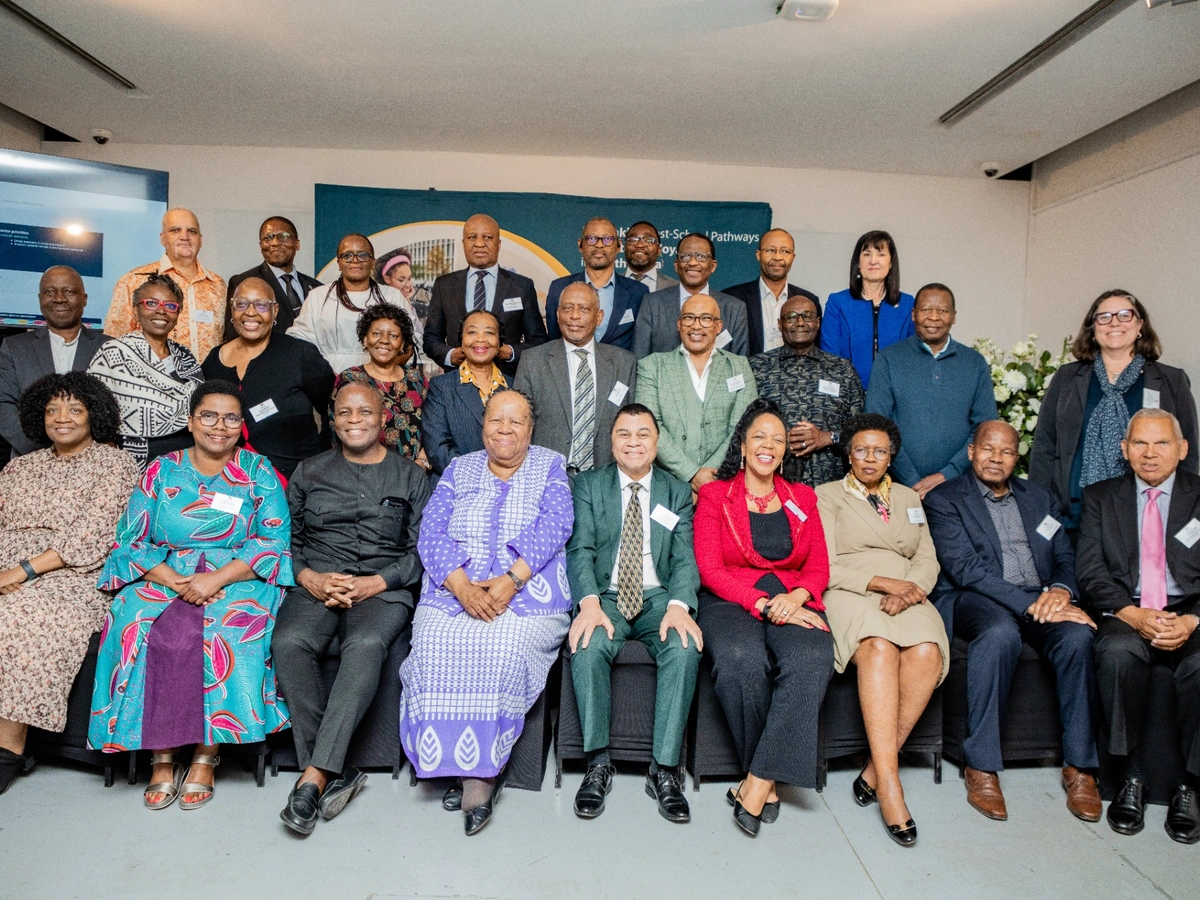
Universities South Africa (USAf) launched its inaugural Thought Leadership series on 2 October 2025 with the theme: Rethinking Post-School Pathways for Youth Employability in South Africa. The discussion highlighted a pressing concern: thousands of learners are excluded from university admission despite achieving a Bachelor’s pass in the National Senior Certificate (NSC).
The broad aim of the Thought Leadership series is to:
- Shape national conversations around critical higher education issues,
- Foster public and stakeholder understanding,
- Inspire innovative solutions through collaborative ideation, and
- Influence policy and legislative reform where appropriate.
USAf CEO, Dr Phethiwe Matutu, underscored the urgency of the issue, noting that in 2024 alone, about 120,000 qualified learners were denied admission—a trend she had already observed in 2023. While the Minister of Higher Education and Training attributed this to funding constraints, Dr Matutu stressed that the challenge runs deeper.
She illustrated the imbalance in the post-school education and training (PSET) sector with the “inverted pyramid”: universities enrol nearly three-quarters of PSET students, while technical and vocational education and training (TVET) colleges and community colleges, combined, serve less than half that number.
Although the National Development Plan calls for reversing this trend, Dr Matutu posed a critical question:
“What do we do in the interim? Do we fold our arms and wait for TVET colleges to be built and capacitated to absorb more learners?”
Spotlight on the Bachelor’s pass: a deeper concern
Two panellists highlighted the quality of the Bachelor’s pass as a greater barrier to university admission than is often acknowledged. Public universities, meanwhile, remain constrained by five‑year enrolment plans agreed with the Department of Higher Education and Training (DHET), designed to keep institutions operating within the national budget.
The role of pure Mathematics as a decisive entry requirement sparked both agreement and controversy. While some academics defended its importance as a gateway subject, others questioned its relevance to fields such as law, performing arts, and the broader Social Sciences and Humanities.
These tensions set the stage for a robust dialogue at USAf’s inaugural Thought Leadership event, which also explored how private universities and TVET colleges can expand opportunities for youth employability.
Click below to access the full YouTube recording.
Presentations
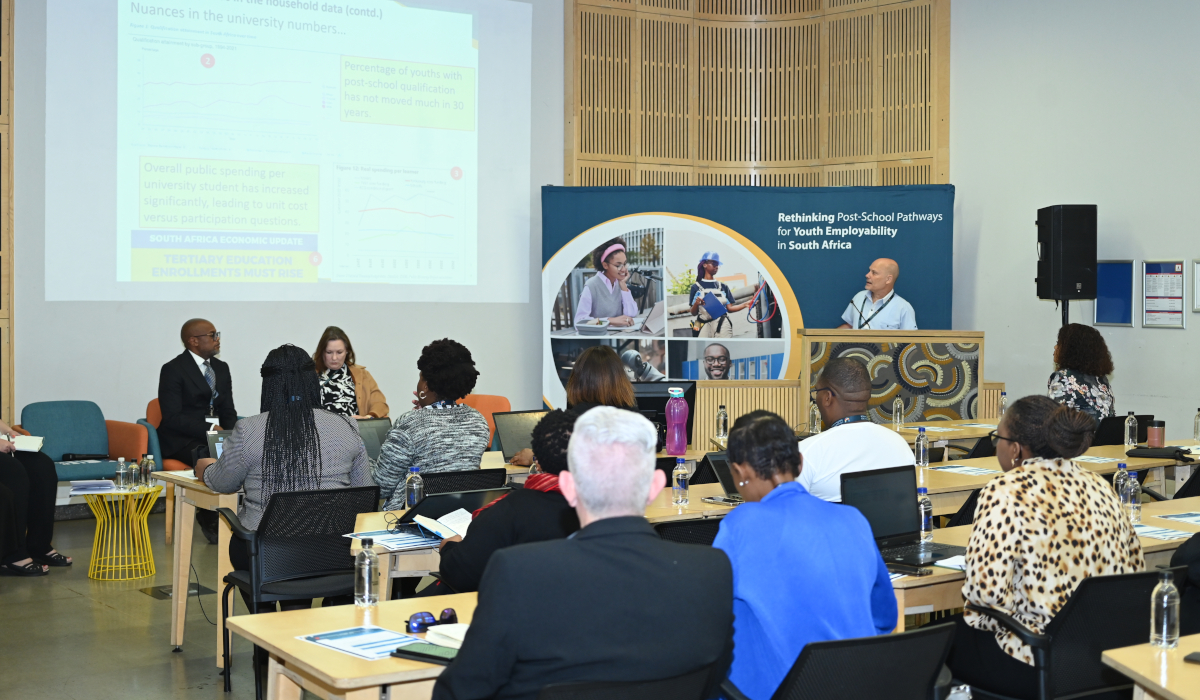
- School completion is advancing more rapidly than university growth: Implications for youth and national development – Professor Martin Gustafsson, Advisor: Department of Basic Education and Economics Professor: Stellenbosch University
- The complexities of universities’ institutional and enrolment planning and policies hindering public universities from leveraging distance learning — Dr Denyse Webbstock, Senior Director: Institutional Planning, Monitoring and Evaluation at the University of Johannesburg
- TVET colleges as feasible and future-oriented post-school education and training pathways — Dr Mamochite George Mothapo, Secretary General: South African Public Colleges Organisation (SAPCO)
- The future of work and workers in South Africa; Multiple pathways to meaningful economic participation — Professor André Roux, Head: Academic Programmes in Futures Studies, Stellenbosch Business School.