Collaboration is advocated as the preferred strategy for strengthening SA’s pipeline of future scholars and researchers
Universities South Africa (USAf) convened national higher-education leaders, academics and policymakers in Johannesburg during late November to strengthen the pipeline of early-career researchers. The meeting sought to address capacity shortages that continue to constrain South Africa’s research ecosystem.
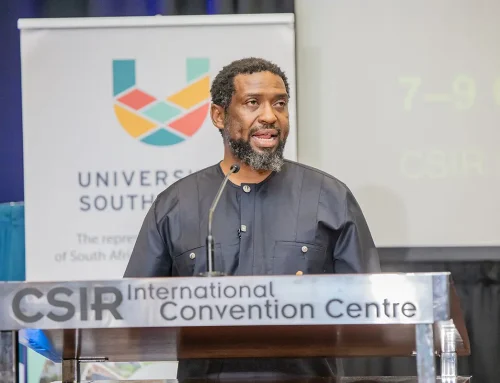
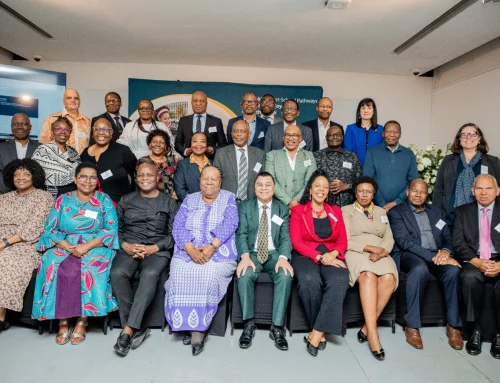
The two-day Advancing Early Career Researchers and Scholars (AECRS) event was hosted by USAf at an O.R. Tambo International Airport venue, outside Johannesburg, from 27 to 28 November. It included a gala dinner and national workshop attended by senior figures from the programme sponsor — the Department of Science, Technology and Innovation (DSTI), university executives, postgraduate development experts, as well as early-career researchers and scholars.
The workshop forms part of USAf’s sustained programme to build a sustainable academic pipeline. It aims to improve research throughput, supervision quality and institutional collaboration.
Programme Leader, Professor Stephanie Burton, who is also a professor at the University of Pretoria’s Future Africa campus, outlined the purpose of the consultation. “Our intention with the workshop is to gather your perspectives,” she told participants. She urged universities to recognise the long-term impact of strengthening the early-career phase.
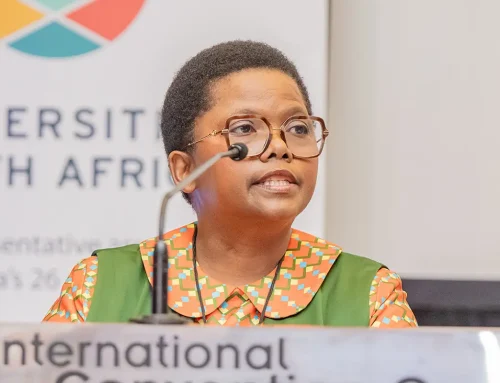
USAf’s Chief Executive Officer (CEO), Dr Phethiwe Matutu, explained that AECRS was designed to confront long-standing systemic challenges. These include research capacity shortages, uneven institutional readiness and limited cross-institutional support structures. With funding support from the DSTI, the AECRS has since established the Community of Practice for Postgraduate Education and Scholarship (CoP PGES), as well as two national platforms — a repository of training resources and a match-making platform connecting early-career researchers to mentors.
The workshop opened with the AECRS Gala Dinner, where Dr Matutu reminded delegates that the sustainability of South Africa’s academic system “depends on coordinated national action.” She said the evening was intended to pause, reflect on milestones and achievements, and reaffirm the sector’s commitment to strengthening postgraduate research development.

After reflecting on common challenges and policy gaps, participants agreed that the sector requires stronger national coordination and standardised mechanisms to support emerging scholars. “We all have similar problems, so it is exciting,” one participant remarked.

Speakers highlighted the importance of aligning USAf and DSTI initiatives with realities inside universities. Several participants described the pressures faced by young researchers, particularly during and after the COVID-19 pandemic.
Universities also echoed the need for institutional champions to drive postgraduate support. One issue raised was the role of universities in providing structured supervision, support and collaborative mentorship. Speakers argued that this is essential for building long-term research capability and strengthening national knowledge production.

The workshop included more than policy discussions. Participants reflected on practical barriers to progress, including funding shortages, uneven access to training and the need for national networks to reduce isolation among early-career researchers. Several speakers encouraged universities to expand collaborative approaches to postgraduate development.
A consistent message was that early-career development cannot be left to a single institution. Delegates emphasised that the system requires coordinated national structures, shared learning and collective resource systems.
The AECRS programme was presented as a model for these structures. Since its establishment, the AECRS has created Thuso Resources and Thuso Connect – two platforms aimed to provide access to academic tools and much-needed mentorship, respectively. These platforms are designed to support smaller institutions and early-career researchers across diverse contexts.
Participants called for the expansion of these platforms in the coming years.
The event concluded with a call to further refine AECRS in 2026. Participants also urged improvements in communication strategies to support universities in accessing and utilising the platforms. They said overall, the workshop succeeded in identifying shared priorities and practical solutions to strengthen research development.
The event closed with a commitment to continued collaboration between the DSTI, USAf and universities.
USAf CEO, Dr Matutu confirmed that the next phase of AECRS will focus on expanding accessibility and increasing institutional collaboration. It will also encourage the retention of emerging scholars within the university system. Delegates agreed that the event demonstrated growing national consensus on building a future-ready academic pipeline.
Bhekisisa Mncube is a contract writer for Universities South Africa.