From lab to market: how SA students are building tomorrow’s solutions today
In typical Durban humidity that left hair care products powerless, seven young South African entrepreneurs proved that innovation does not need perfect conditions but passion, persistence, and the willingness to solve real problems.
At the EDHE-Absa Innovation Challenge launch on 25 June, students demonstrated that the future of South African entrepreneurship is already transforming lives across the continent and beyond.
“This is innovation,” declared Ms. Ntsiki Mkhize, EDHE’s Stakeholder and Partnerships Manager, as she moderated the panel discussion. “When we talk about entrepreneurship development in higher education, we are saying everybody, regardless of what it is that they are studying, can be entrepreneurial.”
The diverse panel, which represented seven universities from Kwazulu-Natal, the Eastern and Western Cape, showcased ventures spanning biotechnology, healthcare, agriculture, food security, and waste reduction. They significantly demonstrated how academic research can transition from laboratory curiosity to market-ready solutions that address South Africa’s most pressing challenges.
Humeira Hassan: turning pond scum into profit

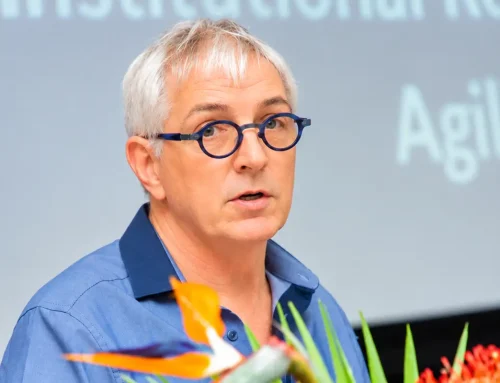
Ms Humeira Hassan (left), who completed her research at the Durban University of Technology’s Institute for Water and Wastewater Technology, found an opportunity where others would see a nuisance. As co-founder of Aquagreen Technologies, she explained their role in transforming algae (the green film that frustrates pool owners) into high-value feed supplements for aquaculture.
“We harvest algae and we use them as a feed supplement for aquaculture,” Hassan said to the engaged audience. “It enhances the growth of fish because the algae have a lot of proteins, amino acids, et cetera.”
Her research revealed that algae-supplemented fish showed improved growth performance, better health, enhanced nutritional profiles, and superior digestibility. Most crucially, algae provide an affordable alternative to fish meal, which is experiencing high demand and escalating costs.
Hassan’s venture exemplifies how environmental challenges can become business opportunities. By addressing both aquaculture feed costs and algae management issues, Aquagreen Technologies demonstrates the circular economy principles increasingly valued by investors and environmental advocates.
Wessel Myburgh: from Stellenbosch to global impact
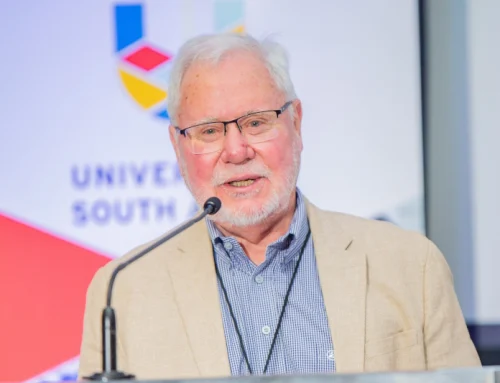
As co-founder and Chief Executive Officer of Urobo Biotech, Dr Wessel Myburgh (right) represents the pinnacle of university spin-off success. The company emerged from Stellenbosch University two years ago, coincidentally around the same time he first participated in the EDHE Intervarsity competition.
“About five years ago, we noticed that there are large industrial facilities in Europe that are struggling to process a certain type of plastic,” Myburgh explained. “It’s causing them a lot of processing problems, and it’s costing them a lot of money because they typically send it to incinerators.”
Urobo Biotech’s solution uses enzymes and microbes to break down problematic plastics while producing high-value chemicals. Though still in the development phase, the company demonstrates how South African innovation can address global industrial challenges.
“We’re taking South Africa to the world with this technology,” Myburgh declared, embodying the ambition that drives successful deep-tech ventures.
His advice to aspiring entrepreneurs emphasised university support systems: “Reach out to entities in your universities. Different processes and mechanisms exist in each university, but the Technology Transfer Office (TTO) is your starting point if you think you have something novel or world-changing.”
Promise Songcata: rural innovation meets urban impact
Mr Ntobeko Promise Songcata (left) from Rhodes University brings a rural perspective to healthcare innovation. The startup business he co-founded with Mr Charles Arineitwe, Pro’land Biotech, developed PetriCam, a device addressing critical gaps in South Africa’s healthcare monitoring system.
“As someone from the rural areas, you know that most of the people who died, especially around COVID, died because there was a lack of devices out there that could monitor and track bacteria in real time,” Songcata explained, wearing his traditional attire connecting him visually to his rural roots, while highlighting how bacterial outbreaks in Africa have raised serious health risks.
Currently, thousands of samples travel weekly from rural clinics to urban pathology laboratories, delaying critical diagnoses. PetriCam’s real-time monitoring capabilities could revolutionise this system, particularly in provinces like Eastern Cape and KwaZulu-Natal where geographical distances compound healthcare challenges.
The device’s versatility extends across multiple sectors: healthcare antibiotic resistance monitoring, food safety applications, environmental monitoring, and agricultural diagnostics. This cross-sector applicability demonstrates how solving one problem can create multiple market opportunities.
Emmanuel Kiyonga: pharmaceutical innovation with purpose
Mr. Emmanuel Kiyonga (right), the 2024 EDHE Studentpreneur of the Year Winner from Sefako Makgatho Health Sciences University, and a pharmacist by profession, represents pharmaceutical innovation at its most ambitious, transforming cancer care in South Africa. His company, Emmaceutics, tackles some of healthcare’s most challenging conditions.
“I’m interested in these difficult conditions,” Kiyonga declared, outlining his company’s portfolio: breast cancer treatments, postmenopausal osteoporosis solutions, and groundbreaking work on nyaupe addiction treatment.
His approach to drug development combines technical innovation with social consciousness. “We are very passionate about women, you know, period pains are a problem. I mean, you can’t expect a woman who is on her period to compete with a man who is feeling nothing.”
Emmaceutics is developing lung cancer alternatives to expensive drugs with limited bioavailability, using their proprietary “heat cool” technique for structure-activity relationship optimisation. With one patent at PCT application level and more filings planned, Kiyonga demonstrates how academic pharmaceutical research can transition to commercial application.
His journey through SMU’s TTOs illustrates the innovation pathway: “When we discovered the drug, I like to call it a pharmaceutical miracle. We did characterisations, found weird characters on the molecules, discovered it’s a new molecule nowhere in the world. The TTO helped us file for patent protection.”
Luyanda Mchunu: e-commerce meets food security
Mr Luyanda Mchunu (left), a fourth-year medical student at UKZN, proves that entrepreneurship doesn’t require abandoning academic pursuits. His platform, GrocieFy-SA, addresses food security through technology innovation.
“Most people cannot afford groceries, or they pay more than what they should be paying. On the other side, retailers have food that goes unsold at times, and that food goes to waste,” Mchunu explained.
GrocieFy-SA’s e-commerce platform connects multiple retailers, allowing consumers to shop and access specials across different stores while reducing food waste. The solution addresses South Africa’s twin challenges of food insecurity and retail waste.
Mchunu’s rapid success trajectory demonstrates accelerated entrepreneurship development: starting last year, achieving second runner-up position in the UKZN Battle of All Campuses 2024, the following month winning the internal round of the Amrut Innovation Challenge. His recent presentation at the South African BRICS Youth Association (SABYA) Innovation Summit 2025 in Cape Town shows how university competitions create platforms for national recognition.
Currently engaging retail groups across KwaZulu-Natal, Mchunu exemplifies how student entrepreneurs can build scalable solutions while completing their studies.
Anga Mzozo: community impact through innovation
Ms Anga Mzozo (right) from the University of Zululand, known affectionately as “Bye Nana” from her memorable EDHE competition pitch, co-founded AL Winery with her best friend, Ms Lehlogonolo Mogashoa, to address community challenges through academic innovation.
“During our food microbiology course, we realised that we could develop a product that will help our community,” Mzozo explained. Their research revealed that over 50 street vendors in Empangeni and surrounding areas lose significant money discarding overripe bananas.
AL Winery’s non-alcoholic banana wine transforms waste into opportunity while creating employment for unemployed youth. “We reduce our food waste while building sustainable communities,” Mzozo noted.
Their success extends internationally, representing South Africa at the Enactus World Cup in Asia and securing sponsorships from Ford, Harmony, EDHE, and the Hult Prize National South Africa Showcase. AL Winery demonstrates how local problems can inspire globally applicable solutions.
“We hope that we will continue to build our communities and tackle more street vendors throughout South Africa and Africa and worldwide,” Mzozo concluded, embodying the scalable thinking that attracts international attention.
Andile Mkhize: AgriTech innovation from experience
Chosen as one of Africa’s top 100 brightest young minds in 2022, Mr Andile Mkhize (left) from Mangosuthu University of Technology brings personal farming experience to agricultural technology innovation. His company, AgriValue, addresses critical gaps in agricultural extension services through technology.
“I lost several crops because an extension officer couldn’t arrive in time at my farm. That is the challenge that we want to bridge,” Mkhize explained, describing the inspiration for their crop monitoring solution.
AgriValue’s platform allows remote monitoring of farms, with Mkhize demonstrating capability to monitor crops in Nqutu from his Durban location. The company combines skills development for farmers with technological solutions for agricultural challenges.
Currently participating in a Nedbank-funded greenhouse project, Mkhize represents the entrepreneur who understands both traditional farming challenges and technological solutions. His company’s AgriSETA accreditation demonstrates formal recognition of their skills development approach.
The Innovation Pathway: from lab to market
The panel discussion revealed common pathways for transforming academic research into commercial ventures. Both Kiyonga and Myburgh emphasised the critical role of university TTOs in protecting intellectual property and facilitating commercialisation.
“Do a novelty search for your step one – IP protect before someone steals your idea,” Kiyonga advised aspiring entrepreneurs. Myburgh added that universities provide exceptional credibility for deep-tech companies seeking funding: “Investors like to see universities on deep tech companies because it gives you academic and scientific backup that non-university companies don’t have.”
However, the pathway isn’t standardised. “Different protocols exist in different universities,” Myburgh noted. “It’s a long road to walk to spin out a company from a university innovation, but universities are exceptional partners to have.”
Innovation across all disciplines
Ntsiki Mkhize’s observation that none of the panellists studied commerce, yet all built successful businesses, challenges traditional entrepreneurship assumptions. Medical students, pharmaceutical researchers, food microbiologists, water technology specialists, and agricultural practitioners demonstrated that innovation emerges from domain expertise rather than business education alone.
“All of them create innovations from the research that they have done, which now needs to be commercialised and go into industry,” Mkhize noted. “That is the support that we want to give.”
Lessons for aspiring entrepreneurs
The diverse ventures showcase several key principles for student entrepreneurs:
- Start with problems you understand: Each entrepreneur identified challenges within their academic field or personal experience, from Hassan’s algae expertise to Mkhize’s farming background.
- Leverage university resources: TTOs, research facilities, and academic supervision provide crucial support for innovation development.
- Think beyond traditional markets: Songcata’s multi-sector device applications and Zululand’s indigenous plant innovations demonstrate cross-industry opportunities.
- Build while you study: Mchunu’s success as a medical student proves entrepreneurship can complement rather than compete with academic pursuits.
- Scale gradually: From local community impact to international recognition, successful ventures demonstrate progressive growth rather than immediate global expansion.
These seven entrepreneurs represent the future of South African innovation: research-driven, socially conscious, and globally competitive. Their stories prove that with proper support, academic research.
Tersia Gouws is a commissioned writer for Universities South Africa.