Student success demands more than admission, universities told
Academics and student leaders argue that belonging, reliable support, shared decision-making and institutional accountability must shape the student journey, not merely improve graduation statistics.
University admission is not the same as having a fair opportunity to succeed. A student who has secured a place but cannot pay registration fees, find accommodation or afford food may already be falling behind before the first lecture. Even those who overcome these obstacles can encounter institutions whose timetables, teaching methods and support systems make academic progress unnecessarily difficult.
That wider understanding of student success emerged during “Reimagining Student Success for a Resilient Future”, a parallel session on Thursday, 8 October 2026, Day Two of the 4th Universities South Africa (USAf) Higher Education Conference. The three-day conference, held from 7 to 9 October at the Council for Scientific and Industrial Research (CSIR) International Convention Centre in Pretoria, carried the theme “Co-Creating a Resilient Future”. Day Two focused on “Reimagining Universities”.
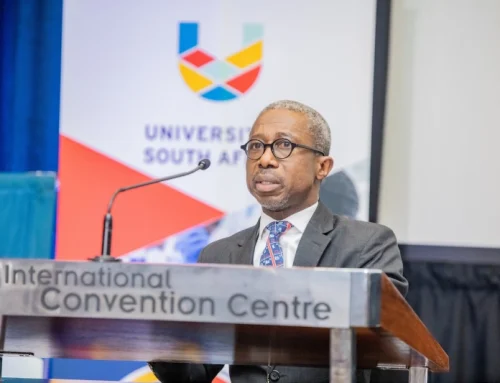
Chaired by Dr Sanele Nene, Director: National Standards and Reviews at the Council on Higher Education (CHE), the session brought together Professor Luvuyo Lalendle, Executive Director: Quality Assurance and Enhancement at the University of South Africa; Professor Francois Strydom, Senior Director of the Centre for Teaching and Learning at the University of the Free State (UFS); and Dr Thato Masekoa, spokesperson for the South African Union of Students (SAUS). Their interventions located student success in the relationship between academic expectations and the institutional conditions in which students must meet them.
The limits of student-centred promises
Professor Lalendle challenged universities to move beyond declarations of student-centredness in mission statements. Resilient institutions, he argued, must redesign curricula, teaching, and support around the student experience, while preparing graduates to think critically, work across disciplines, and contribute beyond university walls.
That requires more than adding artificial intelligence (AI) to the classroom. Professor Lalendle called for stronger digital literacy, work-integrated and project-based learning, the ethical use of technology and infrastructure, and support for students with unequal access to devices and connectivity. Academics must also make room for students to participate in shaping their learning rather than treating them exclusively as recipients of knowledge.
He identified fragmented accountability as an institutional weakness. Universities collect information on academic performance and at-risk students, but responsibilities may be dispersed across units, leading to insufficient coordination. Learning analytics, student surveys and cross-functional teams could help institutions identify problems earlier and act on them. Professor Lalendle also warned that an exclusionary institutional culture can undermine even well-designed policy.
Belonging is an educational condition
Professor Strydom placed belonging at the centre of the evidence on student engagement. Students who feel part of an academic community are better positioned to participate, persist and progress. Meaningful interaction with lecturers, peer mentoring, tutorials and collaborative learning are among the practices that can strengthen that connection.
But he resisted simplistic explanations of absenteeism. Students decide whether attending a class adds value, whether they can afford to travel to it and whether competing assessments or other obligations make attendance manageable. A student’s absence does not, by itself, establish indifference; nor can engagement be improved merely by asking lecturers to be more entertaining. Programme design, workload and student circumstances have to be considered together.
Professor Strydom illustrated the competing pressures through research on class attendance. A student might stay away because lectures offered little that could not be obtained online. After all, transport or food was unaffordable, or because overlapping tests and quizzes left insufficient time. He said engagement had to be understood across programme design, timetabling, workload and students’ material conditions. ‘You can’t just look at one thing when you look at student success,’ he told delegates.
Professor Strydom said the system, known at the university as GPS at UFS, used learning-management-system activity to flag possible difficulties before the end of a semester. A successful call centre would then contact students and direct them to existing services, rather than create a separate support bureaucracy. He told the session that the university provided approximately 15,000 tutorial places and recorded 52,000 academic advising interactions annually, but cautioned that large volumes of support activity were not enough without coordination.
Professor Strydom said students reached by the call-centre intervention achieved about a 5-percentage-point improvement over a semester. He added that almost 40% could not be readily contacted because their details were not kept up to date. These limits, he suggested, made the mundane task of maintaining reliable records part of effective student support.
Professor Strydom cautioned against confusing familiarity with mobile phones with mastery of academic digital skills. Universities, he said, must help students develop practical competence with computers, online learning and AI. Technology can provide useful formative feedback, but it can also deepen inequality or weaken independent judgement if deployed without appropriate educational design.
Students demand a voice in decisions
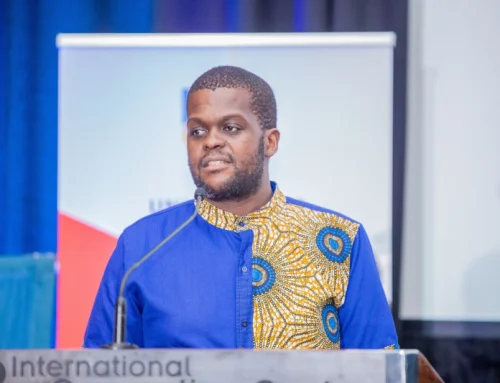
Dr Masekoa confronted the distance between institutional accounts of student success and students’ lived conditions. For financially vulnerable students, he argued, an application fee may be the first obstacle, followed by registration costs, uncertain funding, accommodation shortages and hunger. Delayed support can leave students trying to study while working to survive.
“Access cannot simply mean admission,” was the central point of his intervention. Dr Masekoa acknowledged students’ responsibility to attend classes, study and meet academic requirements, but insisted that responsibility must be reciprocal. Institutions, government, and society must provide conditions in which effort has a reasonable chance of succeeding.
He also raised the damage caused by broken trust. Student representative councils may be formally consulted on fee increases yet find that their objections have little influence on decisions. Dr Masekoa argued for students to become partners in governance rather than participants whose presence is used to certify a consultation process. Transparent explanations of financial pressures, the services funded by fee increases and the support available to unfunded students would make difficult decisions easier to understand, even where agreement remains elusive.
On governance, Dr Masekoa questioned consultation that leaves students present but powerless. He described student representatives being told they had been consulted on fee increases, even when their objections were overruled in formal meetings. ‘May we not just be consulted,’ he urged, arguing that students should participate in reaching decisions, not merely hear them once they had effectively been made. He also acknowledged that institutions facing genuine financial distress might need fee increases, provided the costs and funding implications were explained openly.
He proposed a renewed compact built around five principles: access with dignity, shared responsibility for success, meaningful participation, transparency and accountability, and partnership rather than paternalism. These were not demands that students be excused from academic work. Dr Masekoa explicitly accepted their responsibilities to attend classes, study, follow institutional rules and progress towards qualifications. His objection was to assigning all responsibility to students while treating institutional barriers as incidental.
Accessibility tests the promise of inclusion
An audience intervention brought the discussion to students with disabilities. A participant asked how universities could be held accountable for learning environments that are physically accessible and inclusive of different needs. The question extended beyond ramps and buildings to classroom layouts, teaching practices and digital provision.
Professor Strydom said universal design must consider both physical barriers and the needs of neurodiverse students. He acknowledged the resource constraints universities face but argued that scarcity should not become an excuse for inaction. Students themselves, he explained, can act as co-designers of tutoring and support programmes, helping the next cohort navigate challenges they know directly.
Professor Strydom responded that access required more than modifying buildings. The design of teaching, classroom activity and information technology also had to accommodate different needs, including those of neurodiverse students. He conceded that universities faced hard resource limits, but said the constraint should prompt deliberate choices rather than halt reform. At the University of the Free State, he added, students helped design tutorial and support programmes for those following them.
Dr Nene, chairing the panel, returned the discussion to the topic of dignity. She observed that the country’s constitutional emphasis on human dignity extended to the environments universities created for students and academics. Her intervention brought the session’s arguments together without erasing their differences: the student leader stressed basic conditions and trust, while the academics focused on curriculum, engagement, evidence, and institutional design.
From reporting success to making it possible
Professor Lalendle emphasised institution-wide accountability and curricula responsive to changing circumstances; Professor Strydom showed how evidence, teaching design and coordinated interventions might improve student engagement; and Dr Masekoa pressed universities to recognise material hardship, dignity and student participation as part of educational success.
For South African higher education, the question is not simply how many students gain admission. It is whether universities are genuinely prepared to change the conditions that determine what happens to those students once they arrive.
Bhekisisa Mncube is a contract writer for Universities South Africa.