Universities must tackle waste, rebuild trust and put people at the centre of resilience
University leaders challenged South Africa’s higher education sector to curb wasteful competition, restore confidence in institutional governance and ease the growing pressures on academic staff. They warned that keeping institutions afloat was not enough to make them resilient.
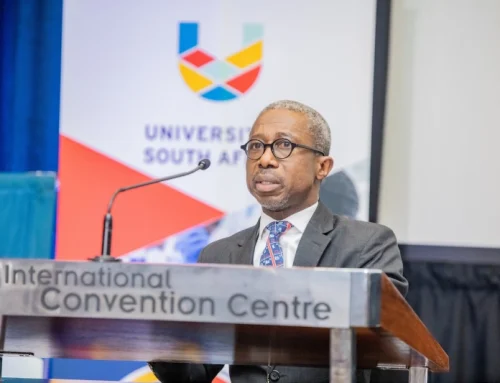
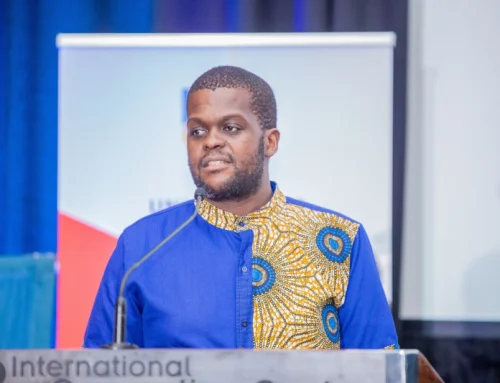
South Africa’s 26 public universities draw on the same pool of public funding, yet competition between them can encourage spending on facilities and research that institutions could share. Professor Bismark Tyobeka, Vice-Chancellor and Principal of North-West University, questioned the cost of that rivalry. At the same time, Professor Sibusiso Moyo, Deputy Vice-Chancellor: Research, Innovation and Internationalisation at Stellenbosch University, warned that mounting administrative demands were exhausting the people on whom universities depend.
Their concerns emerged during Reimagining the University for a Resilient Future on Wednesday, 7 October 2026, Day One: Understanding the Present, of the 4th Universities South Africa (USAf) Higher Education Conference. Held from 7 to 9 October at the Council for Scientific and Industrial Research (CSIR) International Convention Centre in Pretoria, the conference featured the theme “Co-Creating a Resilient Future”.
Professor André Keet, Deputy Vice-Chancellor: Engagement and Transformation at Nelson Mandela University, chaired the discussion. Professor Jeffrey Mabelebele, Vice-Chancellor and Principal of the University of Limpopo, added a challenge about the university’s public responsibilities, arguing that academic freedom and accountability must remain central to institutional change.
Professor Keet opened the reflection by asking how universities could retain public legitimacy while responding to changing circumstances. The discussion followed a day examining funding, governance and the purpose of higher education. Its speakers approached resilience through different institutional responsibilities rather than treating it solely as a question of financial survival. They also examined the responsibilities accompanying institutional autonomy.
Competition that costs more than it delivers
“We are in serious competition against each other or amongst each other, as the 26 public universities, and we do not recognise that we are funded from the same pot,” Professor Tyobeka told delegates. Competition could have value, he acknowledged, but it became wasteful when institutions duplicated work that they could undertake together.
Sharing facilities, pooling expertise and conducting joint research would stretch limited budgets, Professor Tyobeka argued. He called for partnerships organised around results rather than agreements that brought no measurable benefit.
“If we could partner for impact on certain areas as universities, there’s so much we can achieve,” he said, describing the sector’s resources as “very lean”.
Industry also needed to identify the research and skills it required, he added, so universities could respond through joint projects rather than competing separately for the same partnerships.
Professor Tyobeka linked this proposal to a wider difficulty: competition for limited funding, research recognition and institutional prestige could divert resources from the academic work universities were expected to perform. His argument did not dismiss institutional distinctiveness.
He also questioned the expectation that companies should wait for individual institutions to approach them. Industry, he said, should identify its needs and help universities determine which combination of expertise and facilities could respond. That would make a partnership answerable to a defined problem rather than merely add another agreement to institutional records.
Trust begins with governance
Tuition-fee disputes illustrated how financial pressures could become crises of trust, Professor Tyobeka argued. When managers could not demonstrate why higher fees were necessary, students had reason to question how their universities used existing funds.
That scrutiny extended to businesses, philanthropists and other potential supporters. Universities needed to show that they governed transparently, could account for their investments, and would deliver on their promises, he said.
Underused buildings offered another example of avoidable costs. Professor Tyobeka questioned spending on facilities that stood idle for much of the time and proposed using programme design and industry-based learning to better utilise existing space.
But institutions did not have equal opportunities to earn research income, he cautioned. A sustainable funding approach had to recognise different capacities and support students through to graduation rather than count access solely by enrolment.
Professor Tyobeka drew attention to ministerial appointments to university councils. Where vacancies left councils operating with thin quorums, he said, institutions could struggle to exercise oversight or hold their executives accountable. Council members were needed not simply to occupy seats but to contribute skills to institutional strategy.
He also returned to the relationship between student funding and completion. Increasing access without adequate support through to graduation could waste public investment when students dropped out. Universities had responsibilities of their own: supporting academic progress and using existing resources effectively. The distribution of research income was another constraint.
His example of campus property illustrated the pressure to rethink programme arrangements. Buildings carried costs for maintenance, electricity and municipal charges even when teaching facilities were unused for significant periods. Professor Tyobeka referred to alternatives in which study and industry-based learning were organised to make better use of infrastructure.
The human cost of institutional inefficiency
“What we are not aware of is the amount of information that we have to deal with and how complex the processes have become,” Professor Moyo warned. She connected this accumulation of tasks to staff burnout and questioned why more technology had not made university work simpler.
Emails arrived at all hours, often with an expectation of immediate replies, she observed. Rather than installing more systems, university leaders needed to simplify the work those systems were supposed to support.
Professor Moyo called for more agile and frugal operations. She urged institutions to judge digital transformation by whether it removed avoidable work, improved teaching and released time for the people responsible for the academic project.
Artificial intelligence (AI) made those choices more urgent. Industry was adopting the technology quickly, she said, while parts of higher education remained resistant. Universities needed to reconsider curricula and graduate skills without ignoring the costs of AI infrastructure or widening inequalities in student access.
For Professor Moyo, the pace of technological change also raised questions about staff preparedness and the relevance of graduate skills. She reported that the day’s discussions had examined curriculum change, artificial intelligence, institutional agility and access to infrastructure.
She also said universities spent time on leadership and governance disputes that could otherwise have been devoted to students and institutional transformation. The growing complexity of routine operations demanded attention in its own right. Digital innovation should be judged against the workload academics and professional staff actually experienced, rather than the number of systems an institution purchased.
Resilience must serve a purpose
“Universities must be seen as the conscience of our nation,” Professor Mabelebele said. The university’s public role, he argued, demanded academic freedom, institutional autonomy, sustainable funding and the willingness to address contentious questions rather than retreat from them.
Professor Mabelebele cautioned that universities were unlike ordinary corporate organisations. Their histories and intellectual purposes placed particular demands on leaders contemplating change. He identified academic freedom, autonomy, accountability, and sustainable funding as conditions that universities must protect as they adapt to new circumstances.
He also argued that universities should not withdraw from difficult public questions. They needed the freedom and institutional courage to challenge society while contributing knowledge and educating graduates. Professor Keet had similarly questioned whether claims of political neutrality could be reconciled with a university’s public responsibilities when grave events demanded serious academic engagement.
Professor Keet’s challenge was whether institutions could withstand pressure without losing the people and public obligations that gave them purpose. Balancing a budget could not, on its own, demonstrate resilience.
The choices raised at the session were immediate: share costly infrastructure rather than duplicate it, account convincingly for public money and stop adding administrative burdens to already stretched employees. The speakers framed the measure of resilience in terms of what those decisions would deliver for scholarship, students and society.
Professor Keet closed by drawing attention to cooperation between public and private higher education. That relationship, he suggested, warranted further work as the sector examined institutional capacity and the future organisation of provision. It added another dimension to the discussion about resources, since collaboration could not be confined to the 26 public universities alone.
Bhekisisa Mncube is a contract writer for Universities South Africa.