Government sets the resilience test for South Africa’s universities
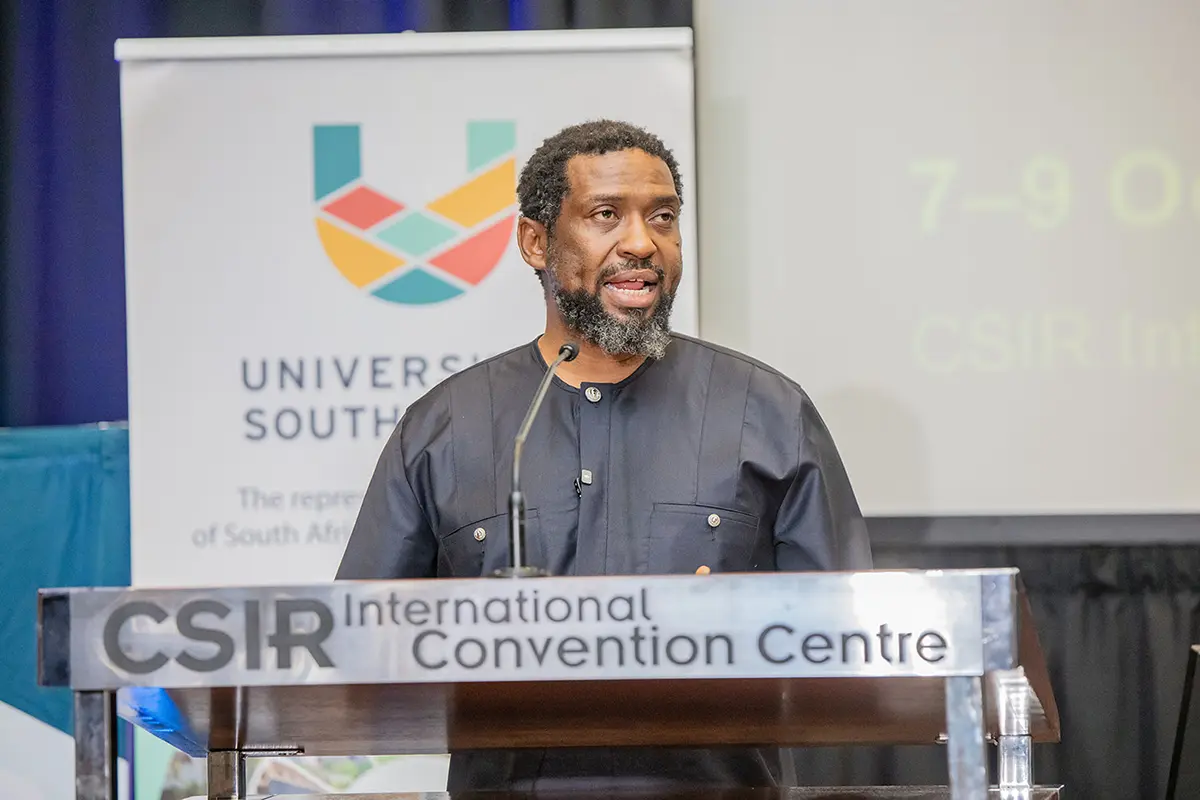
South Africa’s universities cannot call themselves resilient merely because they survive financial, technological and governance pressures. At the opening of the 4th Universities South Africa Higher Education Conference in Pretoria, Higher Education and Training Minister Buti Manamela challenged the sector to decide what it is trying to preserve — and what it must change.
Universities should not become spectators while technological, economic and social change reshapes the world around them.
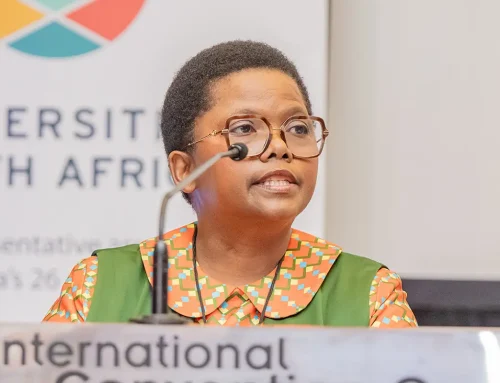
At the opening of the 4th USAf Higher Education Conference in Pretoria on Wednesday, 10 October 2026, Dr Phethiwe Matutu, Chief Executive Officer of Universities South Africa (USAf), challenged universities not to become spectators while technological, economic and social change reshapes the world around them.
The three-day conference, from 7 to 9 October, is being held under the theme Co-Creating a Resilient Future and brings together university leaders with government, academics, students, industry, and other partners. USAf says the conference is intended to provide a national platform for dialogue on the future of higher education, explore collaborative approaches to building resilient, inclusive, and sustainable universities, and identify practical actions to strengthen the sector’s resilience and responsiveness.
For Matutu, resilience could not mean simply learning to absorb the next shock.
“This conference serves not only as a platform for reflection, but also as a call to action.”
The programme itself makes that progression explicit: Day One examines Understanding the Present, Day Two turns to Reimagining Universities, and Day Three concludes with Co-Creating the Future.
“Instead of being spectators as change happens, the key intent of these deliberations is to shape the future that we want, that will be in service of society.”
Minutes later, Higher Education and Training Minister Buti Manamela picked up that challenge and complicated it.
“Before we ask how resilient our universities are, we should ask what we are asking them to sustain.”
That question turned an inviting conference theme into a test.
Are universities trying to sustain the institutions they inherited? Are they sustaining access to knowledge for people who have historically been denied it? Or are they sustaining society’s capacity to understand itself, solve problems and imagine a different future?
For Manamela, these questions could not be separated.
“A university that cannot pay its bills cannot fulfil its purpose. But a university that balances its books while losing its purpose has also failed.”
That tension between institutional survival and public purpose became the organising argument of his opening keynote.
The Minister said he would test the university through three questions: how it is financed, how it is governed, and what knowledge and human capability it must produce in a changing world.
Public trust, he argued, connects all three.
Access does not end at the university gate
The first resilience test is money, but Manamela rejected a funding debate confined to tuition fees or the National Student Financial Aid Scheme (NSFAS).
For a student, he argued, access becomes real only after admission.
The promise of university is tested when a student cannot secure accommodation, when an allowance arrives late, when a laboratory cannot accommodate a growing class or when academics have too little capacity to support struggling students.
That is why, he said, financing becomes inseparable from the academic project.
Universities are entitled to demand predictable resources, but government is equally entitled to expect substantial public investment to produce public value.
The problem is the gap between what society asks universities to do and the resources available to do it.
Manamela later returned to that point in response to delegates’ questions.
“We need to move beyond assessing the success of the system by the number of students, and also just by the number of graduates.”
Universities, he argued, should know what happens to students after graduation and should understand the conditions that determine whether students succeed before they get there.
Those conditions increasingly extend beyond the lecture theatre.
Students face accommodation shortages, food insecurity, pressure on families in the “missing middle”, delayed financial support and the need for academic and psychosocial assistance. Universities have responded with interventions ranging from food banks to student support programmes.
Registration, in other words, is not the same thing as success.
The distinction fits a much older South African argument about epistemological access: entering a university does not automatically mean gaining meaningful access to the knowledge, practices and intellectual life of the institution.
For Manamela, this now produces a blunt financing question: what does student success actually cost?
And the answer cannot be confined to what government transfers to an individual student.
A funded student still needs a functioning university.
Who governs — and where does power stop?
The second test concerns governance.
Manamela made a strong defence of institutional autonomy and academic freedom, including universities’ right to produce evidence and arguments that government may dislike.
But autonomy, he warned, could not serve as an alibi for unaccountable authority within institutions.
“Freedom from government interference does not automatically mean freedom for scholars and students if internal authority silences dissent.”
He considered the point important enough to repeat it.
The Minister then drew clearer lines between the different centres of authority inside a university.
“Councils must exercise stewardship and oversight. Executives must manage. Students and staff must have a meaningful voice.”
When those boundaries collapse, he argued, institutional conflict can become institutional crisis.
South Africa therefore needs to ask whether its governance arrangements remain adequate for the universities it now has.
The test is not whether the correct documents were submitted.
“We need to know whether decisions were lawful, whether conflicts of interest are managed, whether concerns are heard, whether consequences follow misconduct.”
The same discipline applies to government. Ministerial responsibility, he said, should not become the daily management of universities.
That tension between autonomy and public accountability has long formed part of South Africa’s post-apartheid higher-education settlement. It also remains an active concern for USAf. Earlier USAf discussions on governance have examined council architecture, the relationship between councils and executives and the governance weaknesses exposed through institutional experience.
The 2026 conference programme returns directly to those questions through sessions on governance, accountability, renewal and institutional resilience.
Artificial intelligence tests what universities are for
The third resilience test is knowledge itself.
For Manamela, the artificial intelligence debate is too important to be reduced to a question of whether a student used a machine to complete an assignment.
Universities have always done more than transmit information. Their task includes teaching people to interrogate arguments, test evidence, practise a discipline and take responsibility for what they claim to know.
Artificial intelligence makes those functions more urgent, not less.
A system can produce convincing language without establishing that what it says is true. It can generate an answer without understanding the social consequences of acting on it.
“Its usefulness does not remove our responsibility to judge it.”
For South Africa, the questions go further.
Who develops the technology? Whose knowledge, languages and experiences appear in the data? Who owns the infrastructure? Who benefits from the knowledge generated?
Universities therefore need graduates who can both use artificial intelligence intelligently and question it competently.
The country also needs its own capability: African-language technologies, appropriate datasets, computing capacity and credible research partnerships.
And this cannot become the preserve of computer scientists.
Questions about artificial intelligence are also questions about bias, labour, law, power and human dignity. The humanities and social sciences consequently remain as important to the technological future as engineering and the natural sciences.
Manamela also resisted reducing university education to the immediate demands of the labour market.gov
South Africa needs employable graduates, he argued, but it also needs basic research, historical understanding, artistic imagination and citizens capable of reasoning together.
The conference must end somewhere other than where it began
The significance of Manamela’s address lay less in a list of new government announcements than in the standard it set for what must follow. It defined the tests that should guide the next steps.
The Minister gave the conference tests against which the following decisions can later be judged.
On financing, he called for a settlement that connects student support to institutional viability and recognises the full conditions under which learning happens.
On governance, he called for clearer responsibility, effective councils, transparent appointments, conflict-of-interest safeguards and leadership continuity.
On artificial intelligence and knowledge, he urged institutions to move beyond general declarations towards decisions about teaching, assessment, research capacity and collaboration.
At the system level, universities should ask what they could build collectively that individual institutions cannot afford on their own from shared computing infrastructure to research networks and African language capabilities.
But Manamela widened the obligation beyond government and university executives.
Communities should participate in defining research questions and producing knowledge. Industry should help create opportunities for learning and work. Students and organised labour should have a substantive role in shaping change.
Government, too, must listen, decide and account for its decisions.
“Co-creation becomes meaningful when each participant accepts obligations as well as making demands.”
That brought the Minister back to Matutu’s opening proposition.
USAf had invited delegates not to watch change happen, but to shape it. Manamela responded that shaping the future first requires choices about what deserves to survive, what must be redesigned and who carries responsibility for both.
The conference is intended to produce priority actions for resilient universities, collaborative opportunities across teaching, research, leadership, governance and funding, and recommendations for future policy engagement.
It is also part of a continuing USAf conversation. The third Higher Education Conference in 2024 asked delegates to confront the Question of the Future of the University. The fourth conference has advanced the argument.
And Manamela left delegates with the standard by which the next two days or future may ultimately be judged:
“We owe the public more than agreement that the challenges are serious.”
Bhekisisa Mncube is a contract writer for Universities South Africa.