Private Higher Education as the “Cinderella” of South Africa’s post-school education and training landscape
Private higher education remains on the margins of South Africa’s post‑school education and training (PSET) system, where access, mobility, and progression remain uneven. At Universities South Africa’s (USAf) inaugural Thought Leadership event on 2 October 2025, Dr Carin Stoltz‑Urban highlighted the sector’s role in equipping youth for the world of work, despite operating in a landscape historically dominated by public universities.
Her input focused on regulation, study pathways, and the systemic conditions shaping access, learner progression, and opportunity. As one of five panellists, she contributed to discussions on the twin challenge of rising Bachelor’s passes and a growing demand for university education, set against limited absorption capacity, especially in public universities. The Thought Leadership event aimed to build public understanding ahead of the 2026 academic year and to identify long‑term solutions.
USAf created this platform to tackle youth unemployment by offering alternative learning pathways outside public universities and helping young people gain marketable skills. Dr Stoltz‑Urban participated as Chairperson of the South African Private Higher Education (SAPHE) board and Chief Operations Officer of Inscape Education Group, a private institution based in Pretoria.
Revisiting the National Qualifications Framework
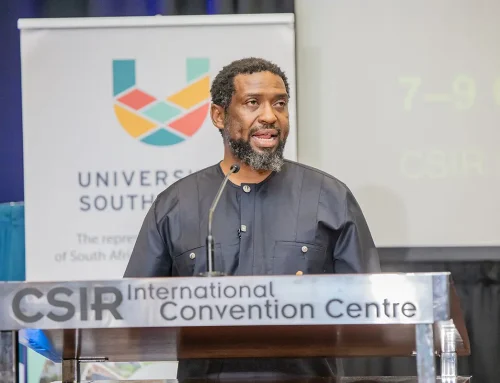
Drawing on her seven-year tenure at the South African Qualifications Authority (SAQA), Stoltz-Urban (right) recalled the hopes invested in the National Qualifications Framework (NQF) as a tool to heal apartheid’s divisions. Its unchanged 1995 preamble still promises “one single integrated national qualifications framework” to locate every qualification within a shared system. At its core were the principles of access, mobility, and progression— what became SAQA’s “song”—meant to ensure seamless movement across institutions and programmes. Yet she contrasted this vision with today’s reality of regulatory divisions, funding gaps, and entrenched hierarchies that continue to reflect the “shadows of apartheid.”
She invited the audience to evaluate whether today’s PSET system, with its regulatory divisions, funding discrepancies and persistent perceptions of institutional hierarchy, still reflects the integrated, learner-centred framework envisioned three decades ago.

Different pathways for differently talented learners
To illustrate why diverse institutions matter, Stoltz-Urban shared her twins’ contrasting journeys to demonstrate that they possess different strengths and therefore thrive under different conditions. This, in her view, captured the essence of the post-school environment: learners succeed in divergent ways. “There is no such question as ‘how clever are you?’ ” she observed. “The question is, in what ways are you clever?”
Her daughter, who pursued a design-oriented route at a private institution, “went into flow” and flourished in a setting that recognised and nurtured her creative abilities. Her other daughter, by contrast, followed a more traditional academic pathway that aligned with her interests and learning style. These contrasting experiences reinforced her point that a single institutional model cannot serve the full spectrum of learner needs. Different environments nurture different forms of potential.
Private higher education, she argued, is therefore essential within a national ecosystem that must accommodate varied talents and trajectories.
Regulatory alignment and institutional positioning
Stoltz-Urban also examined how varied learning environments are structured and recognised, positing that if the post-school sector relies on institutional diversity to support different learner strengths, then the regulatory framework becomes central to enabling that diversity.
She noted that while private institutions differ from public universities in size, mission, and learning models, they must still meet the same national quality standards. To operate legally, they must register with the Department of Higher Education and Training (DHET), secure accreditation from the Council on Higher Education (CHE), and list their qualifications on the National Qualifications Framework (NQF).
Yet, despite fulfilling these requirements, private institutions may not name themselves universities. This is expected to change once the regulations supporting DHET’s Policy for the Recognition of South African Higher Education Institutional Types (published in the Government Gazette No 53515 of 17 October 2025) are available and operationalised. She saw this distinction exposing core tension between private providers’ academic legitimacy being affirmed by regulatory processes, and naming conventions creating a visible status gap unrelated to quality. These legacy structures within the PSET system continued to shape public perception of private providers. It further highlighted the disconnect between the spirit of the NQF—built on access, mobility, and progression—and the reality of how institutions are positioned.
Her point was that if the system truly aimed to support diverse learners, institutional categories and public terminology should not reinforce the hierarchies that the NQF sought to dismantle. She was further urging the audience to consider how regulatory labels and structural divisions shape learner choices, available pathways, and societal assumptions about the value of different forms of learning.
System demand, funding and access pressure
Dr Stoltz‑Urban highlighted funding as a key factor shaping learner mobility. While regulation defines institutional recognition, funding determines access, together influencing institutional identity and participation. She argued that funding drives mobility not by reflecting ability or programme fit, but by dictating which parts of the system are financially accessible.
Currently, the National Student Financial Aid Scheme (NSFAS) supports only public universities and TVET colleges, excluding private higher education even when these institutions may offer environments, support, or specialised programmes better suited for certain learners. “It is unfair that a child’s choice of institution determines whether they qualify for NSFAS,” she noted, stressing that aid is tied to institutional category rather than learner need.
She said this exclusion limits options for students who might thrive in private settings with smaller classes, focused support, and niche programmes. As a result, affordability outweighs educational fit. The impact extends system‑wide: while public universities face mounting enrolment pressure, private institutions often have unused capacity.

Higher Education funding patterns limit study options for especially needy students who would have thrived in smaller-class, niche-programme settings – Dr Stoltz-Urban observed.
Funding, she concluded, is more than a financial mechanism—it steers learners toward certain institutions, shaping participation patterns and perceptions of legitimacy. By linking regulation and funding, she underscored how system structures, rather than learner needs, determine who studies where, undermining the flexibility and mobility the NQF was designed to promote.
Financial reinvestment and institutional models
Examining how private institutions operate within these constraints, Dr Stoltz-Urban addressed the widely-held assumption that private higher education is primarily profit-driven.
To rebut this notion, she cited her own institution’s redemptive approach, noting the over R22 million Inscape has allocated to scholarships in the last ten years. “Tell me again, we are only in it for the money,” she remarked with candour.
Not necessarily claiming that all private institutions follow this model, she was demonstrating a diverse sector where some institutions operate commercially, while others adopt mission-driven or reinvestment-oriented practices.
She thus positioned private institutions not simply as alternatives in a crowded system but as part of the broader effort to widen opportunity across the post-school landscape — particularly for students excluded from public funding.
Collaboration, not policy, effectively builds system coherence
She next turned to a third pillar shaping learner experience in the PSET system: pathways. If regulation defines institutional positioning and funding determines access, pathways govern how learners move between institutions. For her, system coherence depends on how well these three elements align.
She recalled earlier collaborations between public and private providers, such as when private institutions were accredited to support the University of South Africa’s (UNISA) students, who then sat for UNISA exams. Though later discontinued, she suggested this model offered a valuable example of how institutions might work together to strengthen pathways, remarking, “maybe there’s a space to revive that kind of practice.”
Such partnerships, she argued, enable institutions to share responsibilities in expanding opportunity rather than duplicate effort. They also highlight that coherence is built not only through policy frameworks but also through working relationships that recognise the strengths of different institutional types.
Meaningful bridging between institution types
Dr Stoltz-Urban highlighted opportunities within existing qualification structures, particularly higher certificates. The Higher Education Qualifications Sub-Framework assigns them “a twofold purpose”: as vocational qualifications preparing students for employment, while also preparing them for further study. This dual role, she argued, makes them a valuable bridge between schooling, private institutions, and public universities.
She stressed that alignment across institutions requires collaboration, trust, and clarity of roles. Private providers, public universities, technical colleges, and other PSET institutions occupy distinct spaces, yet they are interconnected by the learners who move between them. Pathways, therefore, are more than formal articulation agreements; they are the functional links that help students navigate studies, adapt to changing circumstances, and pursue opportunities aligned with their strengths.
This theme returned the audience to the original intent of the NQF: to give learners options, ensure that learning in one environment is recognised in another, and to prevent institutional categories from becoming dead ends. In this sense, public and private institutions are not parallel or competing systems but parts of a shared infrastructure through which learners progress, adapt, and grow.
She was thus reinforcing her broader argument that coherence in the PSET system arises not from uniformity, but from effective integration of diverse institutional types, each serving different learners. Collaboration, rather than separation, ultimately strengthens progression and mobility across the sector.
Her emphasis on shared pathways echoed earlier reflections by Dr George Mothapo on the importance of articulation and system-level alignment across institutions.
Policy clarity and the future configuration of the system
Fast-forward to February 2026. Dr Stoltz-Urban applauds DHET’s Policy for the Recognition of South African Higher Education Institutional Types for influencing how private higher education providers position themselves to ensure that their contributions are understood across the system.
She says the issue extends beyond naming conventions or procedural alignment. It is about ensuring that public and private institutions alike clearly grasp their roles, responsibilities, and possibilities within a system designed to function as a cohesive whole. Without such clarity, institutions risk working at cross-purposes, misinterpreting mandates, or duplicating efforts that could be better coordinated.
Policy clarity may well support the PSET system coherence that she advocated for at the USAf Thought Leadership. It could help to advance the initial NQF intentions to support learner movement; promote recognition of institutional types; influence participation across the board; and encourage collaboration in an enabling policy environment.
Clear policy, Stoltz-Urban argued, enables institutional diversity to be recognised as complementary rather than contradictory, shifting the sector from fragmentation toward the integrated vision originally embedded in the NQF, of meaningful access, guided mobility, and genuine progression for all.
“Let us work together across subsectors,” she urged. “There is no such thing as public versus private here. It is one PSET system, and we are building it together.”
Thoriso Kolobe is a Communication Consultant for Universities South Africa.