Senior scholars acknowledge the AECRS programme’s utility, and call for urgent other reforms to address systemic challenges
Senior academics and research leaders have called for deeper reform in South Africa’s higher education system to strengthen postgraduate pathways and improve research leadership.
These sentiments emerged at the Advancing Early Career Researchers and Scholars (AECRS) Workshop, recently hosted by Universities South Africa at an OR Tambo International Airport venue, in Gauteng, from 27 to 28 November 2025.
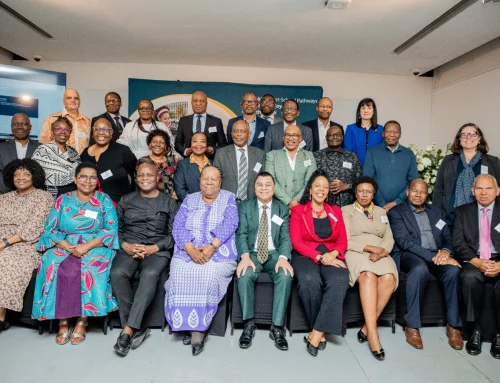
Representatives from universities across the country attended the workshop, including the AECRS programme sponsor, the Department of Science, Technology and Innovation (DSTI), and senior sector leaders. The AECRS forms part of USAf’s national effort to grow a sustainable academic pipeline and to develop support structures to grow and retain future researchers and scholars.

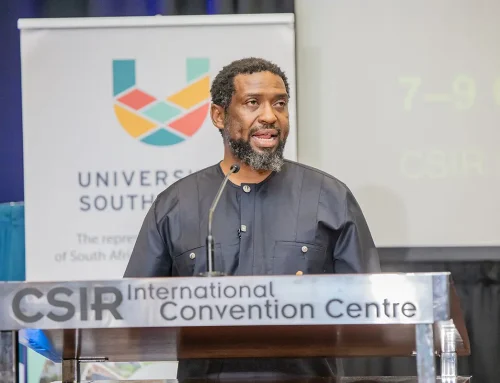
In his keynote address, Dr Andrew Kaniki (left), Academic Advisor to the Future Professors Programme and former Executive Director at the National Research Foundation, stressed the need for structured systems to support academic careers. Dr Kaniki emphasised the role of mentoring and professional development in helping early-career researchers feel valued and supported.
He highlighted national collaboration, shared systems and institutional backing as essential to addressing long-standing challenges in the higher education sector.
Delegates noted that his address reinforced the role of mentoring, national platforms and coordinated action.
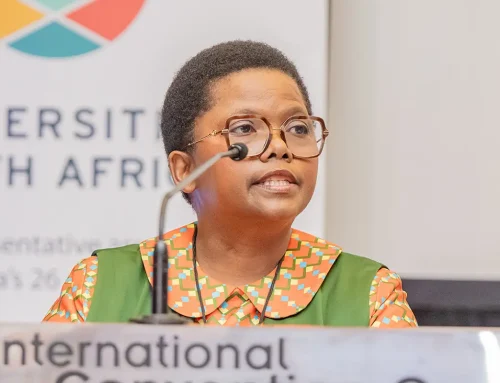
The opening session included remarks from Programme Leader Professor Stephanie Burton (right), who told the workshop participants that the event was intended to gather universities’ perspectives on the AECRS, thus opening discussions on postgraduate support and academic development.
Speakers and participants acknowledged how shared platforms like AECRS are vital for collective progress, helping universities collaborate to address supervision shortages and resource limitations, and fostering a sense of shared purpose.
The workshop spotlighted Thuso Connect and Thuso Resources as central to improving postgraduate support. Participants reported that the platforms offered essential academic tools and meaningful mentoring opportunities.


Ms Adele Robinson (above), a graduate and lecturer at the Durban University of Technology who holds a Master’s degree in Accounting and Business Management and is currently a PhD candidate in Accounting, noted that the platforms had helped her build professional connections. “The platform bridged the gap for a lot of activities, especially meeting academics going through the same journey,” she said.
Researchers also reflected on institutional constraints, including curriculum planning, administrative systems and access to supervision. One participant underlined the need for more strategic university planning. “We have to think about the level of the university organisation,” the individual commented, highlighting the need for academic management structures that support postgraduate work.
Delegates drew on lessons from the CoViD-19 period, when research output pressures increased, and institutional support was strained. Mr Carlos da Silva (right), a South African–trained biomedical scientist who holds a Master of Health Sciences (MHSc) in Biomedical Technology and is a graduate of the Department of Higher Education and Training’s New Generation of Academics Programme (DHET–nGAP), noted that academic performance expectations escalated and that “pressure for productivity increased during CoViD-19.”
Speakers emphasised that systemic reforms and shared platforms are essential for addressing research capacity gaps and improving access to mentorship, particularly for early-career scholars.

Much of the discussion focused on the need for system reform beyond individual universities. Delegates agreed that the AECRS programme has demonstrated how national structures and shared platforms can support the development of academic careers. Researchers supported further improvements to the platforms, including expanding access, improving usability and strengthening institutional integration.
Participants stressed that national collaboration and shared approaches are central to the future of higher education management and research development.
The closing session underscored the need for sustained action and continued engagement. Delegates stated that workshops such as AECRS provide space to identify policy gaps, strengthen mentoring models and develop shared priorities.
USAf Chief Executive Officer Dr Phethiwe Matutu confirmed that the next phase of AECRS will be finalised in 2026 and will continue to prioritise platform development and national collaboration. Dr Matutu indicated that the workshop demonstrated that coordinated reform, shared platforms and professional development are essential to strengthening postgraduate research capacity.
The message from the workshop was clear. Delegates warned that without stronger national systems for postgraduate support, universities will struggle to retain the next generation of scholars. The session closed with a commitment to continue building national mechanisms for collaboration and capacity-building.
Bhekisisa Mncube is a contract writer for Universities South Africa.