Towards becoming an entrepreneurial university – lessons from the Durban University of Technology
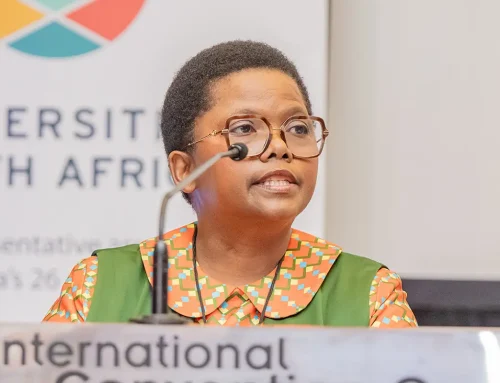
Although the Durban University of Technology (DUT) is naturally predisposed to produce innovators, it took creating a central home for entrepreneurship to get the institution more focused on becoming a truly entrepreneurial university. This, according to Professor Sibusiso Moyo, Deputy Vice-Chancellor (DVC): Research, Innovation & Engagement, who was among the DVCs attending the recent Design Thinking Executive Leadership Workshop: The Role of Deputy Vice-Chancellors (DVCs) in University Entrepreneurship that was hosted in Johannesburg.
Professor Moyo was asked to share with other DVCs, the story of DUT’s journey in this regard.

She said from her days as Director: Research and Postgraduate Office through to taking over the deputy vice-chancellorship in 2017, she had noticed that the number of students who knocked on their door for support around their business ideas had increased. Typically, the students approached the Research and Postgraduate Office for financial support or the Technology Transfer Office for ideation support. “None of these offices were designed to offer full support from ideation to full incubation,” Prof Moyo said, and therefore, “often it was not clear where to refer the students who needed this kind of support”. She said although the DUT’s strategic plan did talk about both innovation and entrepreneurship, the institution did not quite have a roadmap of how exactly that was to happen. “Many of the programmes in universities of technology are already designed with an entrepreneurial component where students aim to start their own practice, business or start-up when they complete their studies. One of the DUT flagship programmes in Fashion and Design does exactly that. There is also evidence of graduates from the Health Sciences who also now have their own practices in Homeopathy, for instance”.
With the help of an external expert, the DUT undertook an audit in 2018, of all entrepreneurial activities within the institution. This audit made findings and led to a number of recommendations. “In our audit, we discovered that our programmes were already designed to be entrepreneurial. We therefore used that lever to encourage other departments to follow suit.” With the guidance of the Vice-Chancellor and Principal, Professor Thandwa Mthembu, Professor Moyo went on to invite an innovation expert to address various faculties on this topic. Alongside this expert were external other stakeholders who made presentations on their focus areas in entrepreneurship and innovation. “From those insights we were able to develop an implementation plan,” Prof Moyo shared with her peers. This plan involved, as a first step, the establishment of a centralised home for entrepreneurship. Two Centers and Desks were established in Durban and the Midlands to focus on developing, educating and supporting student entrepreneurs. “These Desks work very closely with Faculties. They also complement the work of the Centre for Social Entrepreneurship which was established through a grant from the Small Enterprises Development Agency (SEDA). The Centre focuses on meeting the SEDA expectations as well as supports the University in its drive to develop and support student entrepreneurs.”


Mr Siyabonga Innocent Ndwalane, an alumnus of DUT, drums away on his innovative, portable Bluetooth speakers called Turn-Up. Previously supported by the Centre for Social Entrepreneurship, Ndwalane now manufactures these speakers from the Steve Biko campus and supplies the merchandise to all faculties of the University. Five DUT students, whom he mentored, now form part of his employee team. Read more: https://www.dut.ac.za/ndwalane-takes-his-bluetooth-speakers-to-national-level/


From left, Misses Phumelele Khumalo and Nosihle Dlamini, both budding entrepreneurs and producers of ‘Proudly South African’ haircare and skincare products (examples in the right photo). Also products of DUT’s Centre for Social Entrepreneurship, Khumalo and Dlamini won the ‘Best Entrepreneur Award’ at the Vienna Cleantech Week and GCIP Forum in Europe, in 2019. Photos: All supplied — courtesy of DUT’s Corporate Affairs. Read more: https://www.dut.ac.za/dut-alumnis-create-proudly-south-african-haircare-and-skincare-products/ ; https://www.dut.ac.za/dut-entrepreneurs-win-best-entrepreneur-award-in-vienna/
The newly established entities focus on recruiting student entrepreneurs in collaboration with Faculty. Using the SEDA wheel growth model, the Desks provide training, support students from ideation to full incubation, give post-incubation support, match projects with potential funders or investors and provide seed funding for approved projects. They also give intellectual property support. In addition to all of these, the entities track the performance and sustainability of these enterprises, over time.
Professor Moyo therefore underlined to her peers, the importance of setting up a dedicated entrepreneurship structure headed by a senior leader and programme champion. She said the person must be passionate about entrepreneurship “and even more preferably, must be an entrepreneur or innovator themselves”. She also emphasised the importance of formulating an institutional policy on entrepreneurship, further stating that their own policy proposal was still in draft stage. “One grey area that we still have to overcome is the question of intellectual property (IP) ownership,” Professor Moyo said, further pointing out the need to review the IP policies in higher education institutions to ensure they are not impeding entrepreneurship. “Our policy currently states that the institution should own the IP, especially if we use government funds to develop that product/innovation”. This has implications for accelerating student owned innovations and products that can help them grow their own enterprises. She used this point to caution her DVC peers to ensure that the policies they formulate to promote entrepreneurship do not contradict other policies of their institutions. She added that one victory she could boast of from her university, was giving an opportunity to student businesses on the mentorship programme to begin to supply certain products and services to the institution, through their enterprises. “We use our students to help us — at a fee — in a number of areas.”

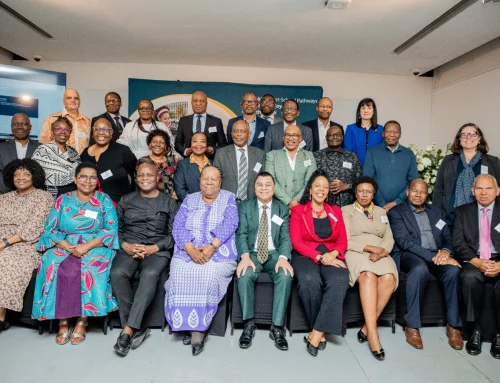
The audience with whom Professor Moyo shared the DUT story was made up of senior management leaders from 19 of South Africa’s 26 public universities. In the main, the leaders comprised deputy vice-chancellors, executive deans and executive directors.
Asked by one of the workshop participants, whether, as a university of technology, DUT attracts a special type of student, Professor Moyo said every university is able to attract bright students. She quickly added, however, that the study environments that institutions provide can either enable or kill the innovative spirit in the students. “The curriculum is important. If you embed entrepreneurship in the curriculum you instil out-of-the-box thinking in students. It is important for them to grasp the basics in their disciplines, and achieve that basic excellence to enhance their creativity.” She also encouraged her peers to involve industry players. “We, at DUT, have realised the important role our academics play in entrepreneurial education. We are working with an expert to train them on project based learning and creative thinking.”
Notwithstanding all this wisdom, Professor Moyo was at the Design Thinking Executive Leadership Workshop to acquire new ideas about how to make her institution truly entrepreneurial in the next five years. She said despite the strides that DUT had made, to date there was still a lot that her institution still needed to do, to reduce the burden of unemployed graduates and inspire students to take up entrepreneurship. “I attended this workshop to learn and find other ways to inspire our students and academics so as to ensure we keep up with the new trends.”
‘Mateboho Green is USAf’s Manager: Corporate Communications.