Vice-chancellors warn against building university resilience on exhausted staff
At the USAf conference, university leaders challenged research incentives, weak collaboration and student exclusion while defending academic freedom and sustained public investment.
Universities cannot build a resilient future by demanding that exhausted academics and struggling students endure ever greater pressures. Professor Dini Mawela warned that institutional survival meant little if universities failed to protect the people expected to carry them through change.
Speaking on Friday, 9 October 2026, at the 4th Universities South Africa (USAf) Higher Education Conference, Professor Dini Mawela, Acting Vice-Chancellor of Sefako Makgatho Health Sciences University, asked what resilience actually meant for universities. She challenged the expectation that institutions could bounce back after disruption, calling instead for systems that anticipate crises, support adaptation and allow people to thrive.
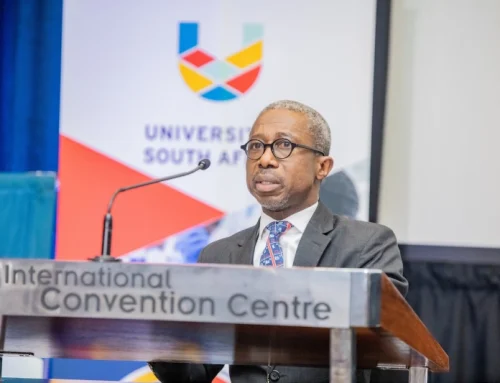
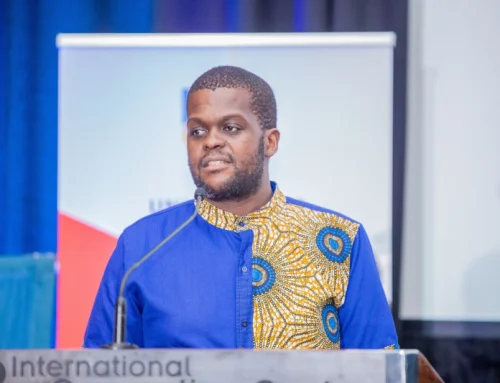
The Vice-Chancellors’ Dialogue: Co-creating a Resilient Future formed part of Day Three, “Co-Creating the Future”, at the Council for Scientific and Industrial Research (CSIR) International Convention Centre in Pretoria. The conference, held from 7 to 9 October, carried the theme “Co-Creating a Resilient Future”. Professor Bismark Tyobeka, Vice-Chancellor and Principal of North-West University, chaired the dialogue.
Joining Professor Mawela were Professor Nokuthula Kunene, Vice-Chancellor and Principal of the University of Zululand; Professor Thokozani Majozi, Deputy Vice-Chancellor: Research and Internationalisation at the University of Cape Town; and Dr Thandi Lewin, Deputy Director-General: University Education in the Department of Higher Education and Training.
Resilience cannot mean working through exhaustion
Professor Mawela questioned the familiar definition of resilience as bouncing back. “How do you bounce back without acknowledging the trauma of the shock?” she asked. She described resilience as a dynamic capacity to adapt, recover and thrive within a “new equilibrium”, rather than return to conditions that had already harmed staff and students.
She warned of an “epidemic” of overwork in universities, where employees were expected to “do more and more” despite depleted capacity. “How do we then use a depleted system to go into a future that is bright?” she asked. She undertook to examine the extent of distress among staff and students at her institution and to develop responses.
The question returned during audience discussion, when a participant speaking from an employee-wellness perspective described extreme staff burnout and asked how universities could pursue transformation without overwhelming the people responsible for implementing it. Professor Mawela said wellbeing had to be brought directly into planning for institutional sustainability.
Professor Tyobeka linked the pressure to ranking ambitions and performance indicators that drive academics towards publication targets while increasing the demands on professional and support staff. He questioned whether becoming a highly ranked university was an adequate measure of institutional performance when staff carried the costs.
Dr Lewin said institutions had expanded responsibilities without necessarily increasing staff numbers. She told delegates that about 60% of academic staff at South African universities were employed on temporary contracts. She linked universities’ ability to appoint permanent academics to the protection of core public funding.
Professor Mawela also questioned whether financial reserves alone could establish a university’s success. She described the contradiction of institutions holding substantial funds while students remained hungry or unable to meet basic needs. For her, student support could not be separated from the institutional structures governing budgets, academic expectations and wellbeing. Her intervention gave the conference theme a sharper, more practical meaning: adapting to disruption required investing in people rather than treating their endurance as an inexhaustible resource.
Knowledge produced with communities
Professor Kunene argued that universities should produce knowledge with society, not simply for it. She called for research questions to be developed alongside communities, industries and public agencies, and for African epistemologies and indigenous knowledge systems to become integral to scholarship. Communities, she said, held knowledge that researchers should recognise before designing solutions.
She reported that the University of Zululand had recorded nine research disclosures during the year, which she saw as potential opportunities to develop intellectual property. Technology-transfer offices should work with researchers earlier, connect projects to industry, and help identify discoveries that could become useful products.
Professor Kunene also cited undergraduate digital prototypes developed through university innovation competitions. She said 50 students had been recognised through a programme supported by the Technology Innovation Agency, with efforts under way to help move their ideas towards commercialisation. Her account placed enterprise development within students’ education rather than solely after graduation.
Professor Kunene also described efforts to review language policy and make tutorials and learning materials accessible in students’ languages. She associated multilingual education with educational justice and the recognition of African epistemologies. Indigenous knowledge systems, she argued, required scholars to engage communities as knowledge holders rather than merely research subjects.
Collaboration before competition
Professor Majozi said collaboration within universities, across disciplines and between institutions was too often discussed in its “narrower sense”, as cooperation between universities alone. He pointed to interdisciplinary institutes at the University of Cape Town while questioning why South African universities continued to duplicate scarce expertise and compete for individual ratings and institutional rankings.
He warned that academic recognition systems could reward individual achievement in ways that discouraged collective research. In a small higher education system with limited resources, duplication placed further strain on institutions. Collaboration, in his view, was becoming a necessity rather than a voluntary addition.
Professor Majozi wanted closer and more deliberate engagement with industry. Advisory boards could help universities identify gaps in curricula; research could enhance firms’ competitiveness; and university innovation could spur the creation of new enterprises. He said employers had reported that some engineering graduates required substantial further training before becoming effective in their workplaces.
He also argued for practical industrial exposure during degrees. As student numbers grew beyond the placements firms could provide, universities should consider pilot-scale facilities that allow students to work with equipment and processes similar to those used in industry. Simulated training, he cautioned, could not automatically replace practical experience.
Professor Majozi challenged universities to protect exploratory or “blue-skies” research, warning that demands for immediate commercial returns could discourage scientific discoveries whose benefits might take decades to emerge. He cited positron emission tomography (PET), now widely used in modern medicine, to demonstrate the long journey from theoretical research to practical application.
Professor Majozi traced the technology’s origins to 1928, when British physicist Paul Dirac developed a theoretical framework predicting the existence of the positron, a positively charged counterpart of the electron. American physicist Carl Anderson experimentally discovered the particle in 1932 and received the Nobel Prize in Physics in 1936. However, researchers only began developing PET scanners in the 1970s, more than four decades after Dirac’s theoretical breakthrough.
Today, doctors use PET scans to detect cancer, determine whether it has spread and assess patients’ responses to treatment. The technology also helps specialists investigate heart disease, assess blood flow and examine neurological conditions, including Alzheimer’s disease. By tracking radioactive substances introduced into the body, PET scanners produce images that reveal metabolic activity and organ function.
Professor Majozi insisted that the scientists responsible for the original discoveries could not have demonstrated their eventual medical applications when undertaking the research. He cautioned against funding and performance systems that judge scientific inquiry solely by its immediate usefulness, arguing that universities must preserve space for unconventional ideas whose value may only become apparent to future generations.
Industry collaboration nevertheless required universities to make a credible proposition, Professor Majozi said. Businesses needed to understand how research would improve their products or competitiveness before committing resources. He was equally critical of universities that pursued partnerships without first identifying the skills and practical experience their graduates needed. Universities still retained responsibility for the intellectual development of graduates rather than becoming narrowly focused training centres.
Research incentives and public responsibility
Dr Lewin said the department was examining the quality of research publications amid concerns that block-grant incentives, university practices, and global ranking pressures could encourage outputs at the expense of rigorous scholarship. Changes to national policy alone would not necessarily resolve problems rooted in institutional cultures, she cautioned.
She urged universities to distinguish legitimate accountability from attempts to control institutions. Academic freedom and institutional autonomy were compatible with responsible stewardship of public funds. Dr Lewin expressed concern about governance disputes and litigation, warning that those charged with governing universities should act as custodians of public institutions rather than their owners.
Funding remained central. Dr Lewin acknowledged structural difficulties in the balance between institutional subsidies and student funding, describing this as a priority for government. She said financial changes would have to protect social justice while sustaining the academic staff, infrastructure and services on which effective teaching and research depend. She identified the balance between institutional subsidies and student funding as a structural problem that government had made a priority for reform.
Dr Lewin said universities’ success was “inseparable from the success of our nation” and that the higher education system’s future “cannot be left to chance”. The sector’s responsibility extended to the “public good”, she said, particularly when mistrust and misinformation required institutions to demonstrate their contribution through rigorous knowledge, capable graduates and engagement with society. Arriving late to parts of the conference, she noted the “big hole” left by delegates who had already departed.
Student participation beyond consultation
The student-success discussions from Day Two resurfaced when Professor Kunene called for academic, financial, digital, and psychological support to be coordinated before students reached a crisis point. She questioned whether student representatives sitting on university councils and committees were genuinely influencing institutional choices.
Questions from the floor pressed the vice-chancellors on how transformation could proceed without overburdening staff and how students could shape decisions from the beginning. Professor Majozi pointed to student representation across governance structures at his institution. Dr Lewin argued that student voice needed to operate not just on councils but also through residences, departments and faculties.
Professor Mawela added that universities had a responsibility to develop students’ confidence and capacity to debate, enabling them to become effective participants in institutional life and society—that required opportunities for engagement beyond formal representative structures.
Bhekisisa Mncube is a contract writer for Universities South Africa.