A panel discussion focuses on governance guardrails and Councils’ architecture
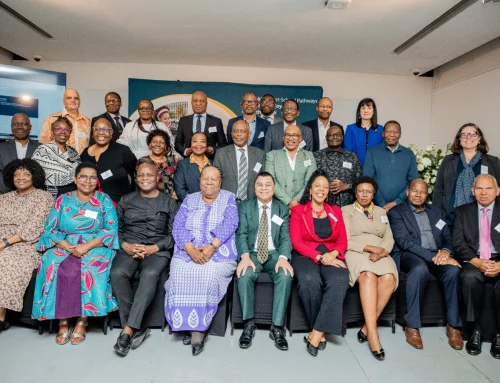
At the Universities South Africa (USAf) hosted governance webinar on 23 March, a panel of four higher education experts examined the structural conditions enabling institutional capture at South African universities. Discussions ranged from council/executive functions, the composition and size of councils, the registrar’s role, to the limits of ministerial intervention.
Early warning signs from audit records

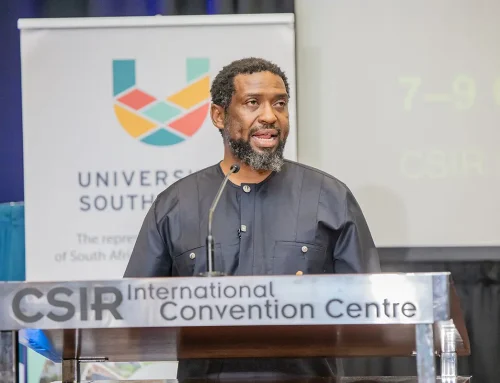
Dr Whitfield Green (left), CEO of the Council on Higher Education (CHE), drew on the CHE’s recently completed institutional audits of all 26 public universities to identify governance weaknesses creating conditions for institutional capture. He conducted a thematic analysis of the audit findings and identified nine recurring problem areas.
On strategy, the audits showed that institutions frequently produced ambitious plans but failed to translate them into operations, with weak alignment between strategy, budgets, and quality systems. Regarding governance structure and role clarity, the audits confirmed what the keynote speakers had described: blurred boundaries among councils, management, senates, and institutional forums, with senates, in particular, becoming progressively weaker in the academic project oversight. Dr Green also noted weak delegation frameworks and misalignment with institutional statutes.
Leadership capacity emerged as another concern, evident in vacancies in key roles, acting appointments, weak succession planning, and limited leadership training identified across the system. In terms of policy implementation, the audits found outdated policies, weak enforcement, limited policy knowledge among staff, compliance gaps, and the absence of policy-tracking systems. Green noted that where policies are not actively implemented, space opens for non-compliant practices to become normalised.
He also pointed out weak accountability systems, manifesting in poor performance management, limited consequences management, and a tendency to conceal rather than follow up when transgressions occur. Concerning institutional culture, the audits identified weak communication, limited stakeholder buy-in, and, in some institutions, a culture of fear that suppresses whistleblowing and discourages the reporting of malpractice. Risk management frameworks were found to be weak, poorly integrated with quality assurance systems, and inadequate in their monitoring capability.
On stakeholder participation, the audits identified a weak student voice across the sector alongside institutional forums that either underplayed or overplayed their role. Council effectiveness was singled out as a high-impact risk area, with selection processes, inadequate training, role confusion, vacancies, and operational interference cited as key concerns.
Green ranked council effectiveness, policy implementation, and leadership stability as the issues with the highest potential to create conditions for institutional capture. He announced that the CHE is currently undertaking a system-wide research project to assess the extent to which statutory governance structures function in accordance with their mandates, to inform and strengthen governance strategies across the sector.
The structural fault in the 1997 Higher Education Act
Mr Ahmed Essop (right), Consultant and Research Associate at the Ali Mazrui Centre of the University of Johannesburg, located the root of council dysfunction in the stakeholder model established by the 1997 Higher Education Act. Under that model, 40% of council members are internal, representing constituencies including students, staff, and management, each with voting rights. Essop argued that this design, informed by the democratisation demands of the anti-apartheid movement, produces internal conflicts that migrate into the council chamber. He said this has led to disputes between students and management or within management itself being resolved through council votes rather than institutional processes.
He noted that the 60% external membership does not resolve the problem, as external members are not immune to self-interest, particularly where institutions represent significant commercial and economic opportunity. He cited interviews conducted during a previous CHE project in which vice-chancellors described most external council members as passengers, unable to participate in strategic debate or provide academic direction, resulting in councils that function either as rubber stamps for management or as arenas for competing interests.
Essop called for smaller, cohesive councils selected against clear criteria, including an understanding of the higher education project and the specific financial, legal, and human resource expertise relevant to complex institutions. He proposed a public nomination and selection process to ensure independence. He also moved for the release of the CHE discussion document developed in 2014 on rethinking the role of councils. He said the time was ripe and appropriate to reopen that work.
Governance must be anchored on the core business of the university
Professor Lungisile Ntsebeza (left), former Chairperson of the University of Fort Hare Council, speaking remotely from the Eastern Cape, drew on his four years on that council to argue that governance must be anchored in the core business of any university: research, teaching, learning, and community engagement.
He raised the importance of recognising academic freedom and institutional autonomy as rights, describing them as the lifeblood of academic life, and argued that council composition and appointment criteria should be evaluated against whether councillors understand and support those values. He called for scrutiny of the criteria ministers use when making council appointments, including the extent to which they consider recommendations from existing councils and management.
Ntsebeza recommended that newly appointed council members undergo formal induction covering the nature of a university, its core business, and the principles of institutional autonomy and academic freedom. He described the absence of such induction during his early years on the Fort Hare council as a factor in the institutional disruption of that period. He noted that greater stability in the final two years of his term coincided with a clearer focus on the academic agenda.
Governance guardrails within the current framework
Dr Phumla Mnganga (right), former Chairperson of the UKZN Council, drew on more than 20 years of experience in higher education governance and over 30 years on corporate boards to argue that neither the current cooperative governance model nor an extreme corporate governance model provides an appropriate framework for South African universities. She called for a collaborative, polyvocal debate to develop a hybrid model that retains the academic project’s centrality.
She described the fault line in the cooperative governance assumption as the expectation that diverse stakeholder groupings can coexist in equilibrium and always act in the institution’s best interest. She cited a personal example in which a convocation grouping at an unnamed institution approached her to serve as council chair, a role she declined because it reflected a disproportionate concentration of power within a single stakeholder group, which she described as a sign of institutional capture already in progress.
On governance guardrails within existing frameworks, Mnganga identified several risk indicators: a subcommittee or institutional formation holding disproportionate power relative to its mandate; extreme micromanagement or overreach by council structures or individuals; the absence of a robust conflict of interest framework covering actual, potential, and perceived conflicts across the entire institution; and meetings that run disproportionately long. She also flagged dominant influence by particular council members over capital or resource allocation decisions, as well as a lack of robust debate, noting that cohesion and differentiation are both necessary in a governance system.
She argued that institutional capture operates across three levels: the institutional framework, the interpersonal, and the individual, and that it ultimately requires individuals who exercise servant leadership, humility toward the mandate of higher education, and ethical leadership.
A discussion
Ms Tasneem Wadvalla, Chief of Staff and Head of Legal Services at the University of the Witwatersrand, noted that if vice-chancellors and council chairs lack the skills and courage to uphold governance standards, institutions are likely to fail. She proposed creating a community of practice that would give senior and middle managers access to experienced individuals as sounding boards and support structures.
Dr Joel Baloyi, Registrar at the University of Venda, raised the issue of the Registrar’s role, arguing that the Higher Education Act does not adequately define it. He noted that the Act refers to the Registrar only as Secretary to the Council, and that the definition of Registrar in the Act applies to the Director-General in relation to private higher education institutions rather than to university registrars. He drew a parallel with the company secretary role under the Companies Act and suggested that a similar legislative clarification would strengthen the Registrar’s position.
Ms Judy Favish (left), former Director: Institutional Planning at the University of Cape Town and now a member of the University of Fort Hare Council, raised a point on the socioeconomic context of institutional capture. She noted that in regions where universities are the primary or dominant source of employment and income, the legislative goal of institutional responsiveness to regional needs can be used as cover by those seeking access to institutional resources.
Another unidentified member of the audience asked whether universities can ever be free of political, social, and economic influence, given that they are products of their context. The member also asked whether the Higher Education Act provides sufficient tools for the DHET to intervene early before governance breaks down, and what intermediate regulatory interventions should exist between monitoring and administration. In response, Mr Mahlubi Mabizela, Director: Operations and Sector Support at USAf, said the Act does not contain such a provision, and that the available recourse is the Ministerial appointment of an Independent Assessor, which occurs only once governance has already collapsed.
Adding to that response, Professor Mthembu questioned the assumption that the Ministerial intervention is itself free of capture risk. He argued that a model in which a single administrator reports only to the Minister concentrates power, creating vulnerabilities of its own. He noted that institutions placed under administration have repeatedly seen their problems re-emerge once administrators leave. He also described the single-administrator model as patently wrong by the standards of both public- and private-sector governance.
Essop echoed that the time-limited nature of administration, typically 18 months to two years, is insufficient for implementing the structural changes needed to address deep-seated institutional capture. He suggested that interventions lasting five to ten years, with a team approach, may be necessary to turn institutions around. He described the current provisions of the Act as a constraint on effective intervention.
Yet another question sought to understand what constitutes adequate training for council members; whether institutionally self-administered induction is sufficient; or whether independently delivered training should be required.
Council members must be empowered to perform their functions
Professor Patrick Fitzgerald (right) of the Graduate School of Public and Development Management at the University of the Witwatersrand, referred to what he called a very good training programme for Council members that USAf once offered during the HESA era through its Higher Education Leadership and Management (HELM) programme. “The DHET took that over on the basis that an organisation of VCs could not ‘train’ their own governors (not that VCs were involved in the design or delivery of the programme).”
He said the DHET initially responded with a very good programme that, at the time, was delivered in person at UNISA. However, the workshops were held only occasionally, with no consistency. “This is one reason why key governance protocols are not well understood or practised, and some members think they must represent (sometimes factional) constituency interests rather than the best interests of the university, while some government appointees think they must represent the Minister of government instead of applying their minds independently.”

Ms Carol Crosley (left), Registrar of the University of the Witwatersrand, shared that many registrars, including herself, continue to use the 2017 DHET Guidelines for Good Governance Practice and the associated workshop materials to induct all new council members, both internal and external.
However, Ms Penny van der Bank mentioned that while the 2017 guidelines advise against politicians serving on councils, the Higher Education Act is silent on that aspect.
Procurement controls as a governance tool
Mr Keenan Jacobs, Treasury Assistant Accountant at the Central University of Technology, contributed ideas about reducing the risks of procurement-related capture.
In supplier selection, Jacobs identified a vulnerability in the standard quotation process that allowed an acquisition officer to collude with a preferred supplier. He proposed a procurement support system in which the officer enters the required specification, and the system automatically selects three suppliers at random from an approved database, removing the officer’s discretion from the supplier selection stage.
During tender administration, he identified the risk of documentation being accepted and altered after the submission deadline. He proposed a secure digital submission platform where documents are uploaded and time-stamped before the closing deadline, after which they are locked and cannot be modified. He further proposed periodic random audits comparing originally submitted documents with those presented to evaluation committees, and the introduction of formal tender opening sessions at which bidders can confirm their submissions were received and recorded correctly.
Jacobs illustrated how procurement systems can be compromised by splitting large purchases that warranted a formal tender process into numerous smaller request-for-quotation transactions. He argued that modern data analytics or machine learning systems could automatically detect such patterns, including repeated requests to the same suppliers and unusual procurement splitting. He proposed that exceptions to standard procurement processes be formally documented and reported to management, Council, and the DHET.
While Mr Brian Schreuder, a Council Member at the Cape Peninsula University of Technology, commended the webinar for providing a thorough account of the indicators of institutional capture, he implored USAf to now turn attention to how institutions should respond once capture attempts are evident. Echoing that sentiment, Professor Khehla Ndlovu, Vice-Chancellor and Principal of the Vaal University of Technology, also expressed an interest in a follow-up webinar focusing on mitigation strategies for institutional capture.
Mduduzi Mbiza is Universities South Africa’s commissioned writer.