Everything Researchers need to know about Open Access publishing: A discussion
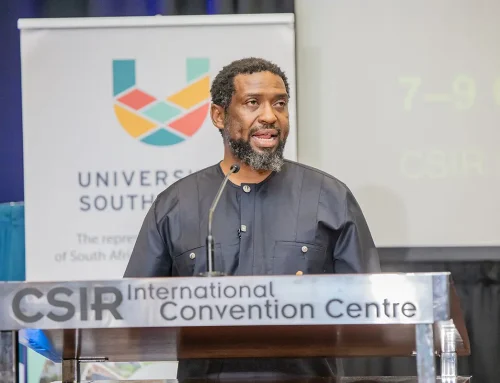
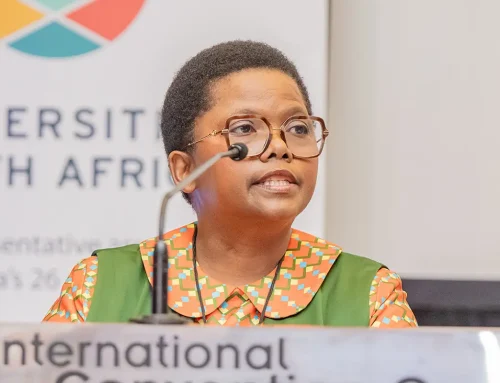
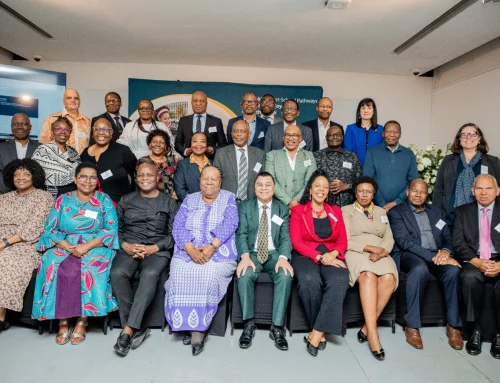
The USAf Community of Practice for Postgraduate Education and Scholarship (CoP PGES) webinar on 30 October 2025, titled Everything Researchers Need to Know About Publishing Free Open Access But Are Afraid to Ask, concluded with a vibrant discussion.
Facilitated by Professor Stephanie Burton, the discussion enabled researchers, supervisors, and postgraduate students to engage directly with the presenters and explore the practical, ethical, and policy-related challenges of open-access publishing and research impact measurement.
Measuring and demonstrating research impact
Ms Anna Leonard, Librarian: Research Support Services at the University of Namibia, asked how to evaluate and demonstrate research impact in local contexts, particularly in public universities where performance metrics often prioritise traditional publication counts. She emphasised the importance of impact frameworks that accurately reflect the realities of African research, where societal and community outcomes may be more significant than citation-based measures.
Dr Nokuthula Mchunu, International Collaborative Research Grants Manager at the National Research Foundation (NRF), responded by outlining the NRF’s new impact assessment framework, which focuses on intended societal impact rather than post-hoc citation metrics. She explained that review panels should evaluate proposals based on their content and relevance, not solely on track records and called for a shift in how universities recognise and reward research excellence. Mchunu emphasised the importance of involving stakeholders from the outset and designing research with societal outcomes in mind.
Addressing perverse incentives in publication
Sioux McKenna, Professor of Higher Education Research at Rhodes University, highlighted the unique pressure in South Africa’s higher education system, where direct funding incentives for publications through the Department of Higher Education and Training (DHET) create a “publish or perish” culture. She argued that this system is globally unusual and leads to problematic publication pressures that can compromise the quality and integrity of research.
Mr Glenn Truran, Director of the South African National Library and Information Consortium (SANLiC), agreed, noting that the Open Access movement must go hand in hand with research assessment reform. He explained that current incentives are structurally aligned to favour quantity over quality and societal benefit, and called for institutional and policy-level changes to reward diverse research outputs and community engagement. Truran pointed out that while read-and-publish agreements have reduced publishing costs, the underlying incentive system still needs to be reformed, if it is to truly support Open Science.
The role of supervisors and institutional support
Mr Louis Du Plessis, Quality Specialist in the Office of the DVC: Research, Innovation and Engagement at the Durban University of Technology, discussed the importance of supervisors modelling engagement and impact activities. He pointed out that many supervision models remain rooted in outdated, production-based approaches and urged supervisors to embrace new forms of research communication and stakeholder engagement.
Dr Leti Kleyn, Digital Research Platform Coordinator at the Future Africa Institute, University of Pretoria, added that supervisors are uniquely positioned to mentor students in navigating the complexities of open-access publishing, copyright agreements, and diverse impact pathways. She emphasised the importance of ongoing support and training for supervisors to enable them to guide students effectively in a rapidly evolving academic landscape.
Kleyn also underlined the importance of institutional support, including workshops and resource hubs, to empower both supervisors and students.
Policy reform and collaboration
Several participants called for greater institutional and government policy reform to support Open Access and Open Science. They highlighted the importance of coordinated advocacy and the need for universities to recognise and reward research outputs that contribute to real-world change and societal benefit.
Mr Truran and Dr Mchunu concurred on the value of collaboration and shared best practices. They noted that initiatives like SANLiC’s read-and-publish agreements and the NRF’s impact framework are steps in the right direction, and also that cultural change requires deliberate modelling and policy reform at the institutional and sectoral level. They also underscored the importance of cross-institutional collaboration to share resources and develop common standards.
Participants noted that many researchers at under-resourced institutions continue to struggle to access the necessary tools and support to publish their work. They stressed the importance of new policies addressing these gaps so that all researchers can participate in the Open-Access movement. The discussion also highlighted the importance of involving students in shaping and implementing Open-Access policies. Students bring new ideas, adapt quickly to new technology, and help ensure that these policies remain relevant for future researchers.
Another point raised was the value of building a strong community of practice. This kind of community encourages ongoing conversation, learning, and collaboration across institutions. Participants shared successful examples and explored ways to maintain and grow these networks.
Overall, the session highlighted several key lessons for improving Open Access and research impact in South Africa. Impact frameworks must reflect local realities and focus on tangible benefits to society, rather than merely citing citation counts. Research assessment needs to change so that different kinds of outputs and community engagement are recognised and rewarded. Supervisors play a crucial role in guiding students and demonstrating new approaches to communicating research. Policy reform and collaboration are also necessary to build a fair and sustainable open-access system. Speakers felt that fair access should always be central to these efforts. They also acknowledged the importance of involving students in making Open-Access work inclusive and responsive to the needs of the next generation of researchers.
By fostering a community of practice and sharing practical experiences, institutions can ensure that open access and research impact are not just ideals, but realities for postgraduate education and scholarship in South Africa.
Mduduzi Mbiza is a commissioned writer for Universities South Africa.