I couldn’t find a single African country’: Prof Zeleza warns Africa is missing the global race for talent
Three-quarters of scientists in the United States are thinking of leaving and countries from Canada to Australia have set aside large sums to lure them away. Africa, said Professor Paul Tiyambe Zeleza, is nowhere in that race.
“To my disappointment, but not my surprise, I couldn’t find a single African country or organisation making such plans,” he told delegates at the 4th USAf Higher Education Conference held recently.

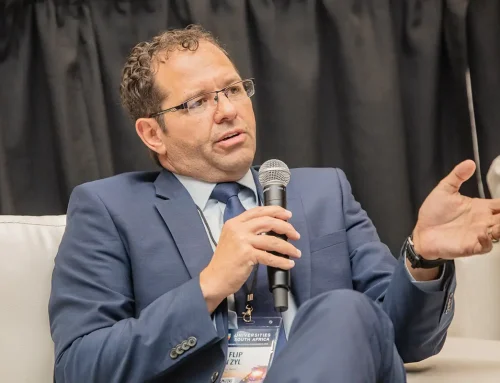
Prof Zeleza (left), currently Professor of African History, Diaspora and Interdisciplinary Studies at the Africa Institute, Global Studies Sharjah, UAE and former Vice Chancellor at the United States International University-Africa, Nairobi, Kenya, delivered the third keynote address, “Internationalisation, Knowledge Equity and Academic Solidarity in a Changing World”, on the second day of the conference held under the theme “Co-creating a Resilient Future”.
Prof Zeleza’s address ranged across five centuries of history, from the Atlantic slave trade to the rise of China. His message for African universities was that the world order is changing fast, that the continent has a window of opportunity, and that complaining about the past will not help it through.
“The endless complaints about the bad hand history has dealt us are tiresome,” he said.
The end of Euro-American dominance
“The world is currently undergoing profound shifts that mark a hegemonic transition beyond Euro-America,” Prof Zeleza said. For 500 years, great power rivalries had been “largely confined to Euro-American states”: Portugal and Spain, then Britain, “the world’s first industrial nation, built on the backs of the Atlantic slave trade”, then Germany, and finally the US and the Soviet Union.
The brief period after the Cold War, when the US stood alone and “some liberal triumphalists declared the end of history”, did not last.
“In 2016, China became the world’s largest economy in PPP terms, purchasing power parity, and surpassed Euro-America in key traditional and new technologies, from electric vehicles and clean energy to advanced robotics and manufacturing, digital infrastructure and AI,” he said.
“In the meantime, the US experienced institutional, political and strategic crises, evident in its shrinking relative economic weight and the erosion of its hard and soft power,” Prof Zeleza continued. “For its part, Europe was bedevilled by economic and productivity stagnation, demographic contraction, strategic and military dependency, and internal political fragmentation.”
The question for Africa, he said, “is whether it creates propitious conditions for Africa’s development”. The answer depends on whether the continent pursues internal transformation, regional integration and multilateralism.
Demography is not destiny’
He was sceptical of the excitement around Africa’s population growth. Africa’s share of the world’s population is projected to reach 39.4% by 2100.
“It has become prosaic to celebrate Africa’s demographic explosion,” he said. “Demography, however, is not destiny. If Africa’s youthful population is not turned into skilled human capital, the expected demographic dividend will descend into a demographic disaster.”
The way out, he argued, is industrialisation: “No country has ever achieved socio-economic transformation without industrialisation.”
He also pointed to the diaspora, more than 300 million people who send home about US$100 billion a year. The purchasing power of African Americans alone, he said, is US$2.1 trillion, which “would rank them, if they were a country, as the 16th largest economy in the world”.
The Pan-Africanist dream of regional integration, meanwhile, “remains deferred”, held back by “the material and ideological interests of the political class and national bourgeoisie, who are reluctant to cede national sovereignty”.
Talent on the move
Prof Zeleza said that this global shift is already reshaping the higher education landscape and that talent mobility is the first casualty.
In a 2026 global survey, 73% of respondents named restrictive government policies in the global North as the main obstacle to internationalisation. International enrolments have dropped sharply in the Anglophone “Big Four”: by 20% for bachelor’s and 24% for master’s students in the US, 24% and 19% in Canada, 11% and 15% in the UK, and 16% in Australia.
Meanwhile, research collaboration between the US and China, once “the world’s most dynamic bilateral partnership in global science”, has fallen by 25% from its 2019 peak, and China has overtaken the US in total output of scientific papers.
Six contradictions
African universities, Prof Zeleza said, are caught in six contradictions. They are “highly internationalised and simultaneously peripheral”. They are pulled between global competitiveness and local relevance. Their partnerships are marked by “asymmetries of power and resources”. Their academics are caught in a mobility trap. Intra-African mobility is blocked by immigration barriers, xenophobia and poor recognition of qualifications, so that “despite all the rhetoric about Pan-Africanism, it is often easier for African students to travel abroad than to other countries on the continent”. And academics are rewarded for global citations over local impact.
On that last point he turned the criticism back on the room. “I am always intrigued by complaints about this. They imply a lack of agency, when it is the faculty and administrators in African universities themselves who perpetuate and reproduce the epistemic inferiority complexes that undergird this state of affairs.”
He also noted that cost-shifting to students and the casualisation of academic work are global trends. In the US, student debt now stands at US$1.9 trillion, “higher than credit card debt”, and only 32% of the professoriate in 2023 held permanent posts.
Seven strategies
Prof Zeleza closed with seven strategies.
The first is to confront Africa’s structural deficits. The continent spends 0.5% of GDP on research and development, against a world average of 1.92%, and accounts for only 11% to 12% of internationally mobile outbound students and 4% of inbound students.
The second is to tackle “the spectre of xenophobia and Afrophobia, which in my view is a product of anti-Black racism: the internalisation of the pathologies of self-hatred among African peoples”.
The third is to attract international talent, including the diaspora.
The fourth is to read global trends to Africa’s advantage. Earlier this year he researched the global race for US talent. According to a 2025 survey by Nature, 75% of scientists in the US are considering leaving “because of the unprecedented assault on universities and the research ecosystem, which has long been the envy of the world, by the Trump administration”. Canada, Australia, countries in Europe and Asia, and the European Union have launched well-funded programmes to attract them, seizing “a historic opportunity for a reverse brain drain from a country that has, since the 1930s, gobbled up a disproportionate share of global talent”. Africa has not.
“But charity, as the saying goes, begins at home,” he said.
The fifth strategy is to strengthen intra-African partnerships, along the lines of the Africa Charter for Transformative Research Collaborations: “Institutional bilateral partnerships must give way to collaborative multilateral partnerships.”
The sixth is to build genuinely regional universities, going beyond the African Union’s Pan African University model and learning from the African Leadership University.
The seventh is a change of mindset: “cultivating the pessimism of the intellect and embracing the optimism of the will”, analysing crises “with cold clarity, but always believing in our agency to change them”. Colonial rule in many parts of Africa, he reminded delegates, “lasted a single lifetime, not the thousand years or the eternity imagined by colonial ideologues”.
He then shared a family story. His maternal grandfather saw the colonisation of his country as a young man, lived through the whole colonial era, and outlived it by eight years. “This gives me solace: that no condition is permanent; that we have the power to remake the world and our institutions in our best interests.”
‘A vow of poverty’
In the question-and-answer session, Prof Zeleza described the Carnegie African Diaspora Fellowship Program, which grew out of his research about 15 years ago. It has since sent more than 700 African-born academics from the US and Canada to work with 204 universities across the continent. “It can be done. It should be done,” he said.
On massification, he said Africa’s higher education enrolment ratio of 14% to 15%, against a world average of 43%, leaves it far behind. Expansion has come without the academics to match. “You can have scholarships, which is important, but ultimately students don’t teach themselves. You need faculty.”
Young people are not choosing academic careers, he said. When he asked his students in Kenya how many wanted to become academics, “they all laughed”. They told him lecturers had no money and drove dilapidated cars.
“In South Africa, academics are still members of the middle class. Trust me, that is not true in many African countries. To join the academy is to make a vow of poverty.”
Africa’s wealthy, he said, tend to send their money to “Harvard and Oxford”, not to the University of Zambia or the University of Eswatini. His own generation of scholars had been “trained to despise the African bourgeoisie”, and so did not know how to talk to it.
“We have to learn how to talk to the African elite, to the African capitalist class that is growing, and make them partners in the enterprise of education.”
Asked whether a “benevolent dictatorship” might serve Africa better, citing Rwanda’s growth, he was emphatic.
“Africa has tried dictatorship for a very long time. It hasn’t worked,” he said. “The real proof of that pudding will be when Kagame is gone.” Africans had fought colonialism and then fought for a second independence because they hated dictatorship, he added. “I don’t see why we should allow ourselves to keep going backwards.”
Janine Greenleaf Walker is a contract writer for Universities South Africa.