South Africa’s 4IR-aligned educational reforms must address inequalities and the youth unemployment crisis
As South Africa contemplates integrating technology into higher education teaching and learning, it must do so with full awareness of the country’s deeply challenged education system, high levels of youth unemployment, and limited digital literacy. These realities form the critical context within which Fourth Industrial Revolution (4IR)-aligned educational reforms must be implemented.
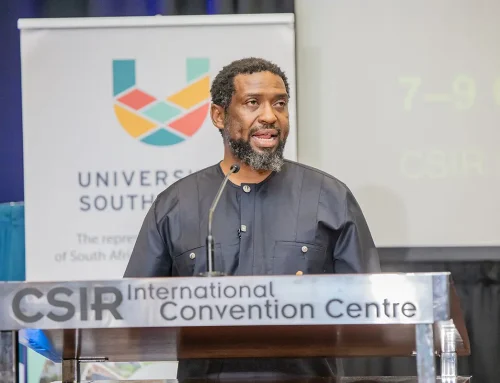
Rennie Naidoo, a Professor in Information Systems (IS) and Research Director at the Wits School of Business Sciences, mentioned this to the 55 delegates at Universities South Africa’s (USAf’s) one-day colloquium on 10 July, who gathered to critically engage with the findings of the USAf Environmental Scan for 4IR Training and the World of Work (2024) report.

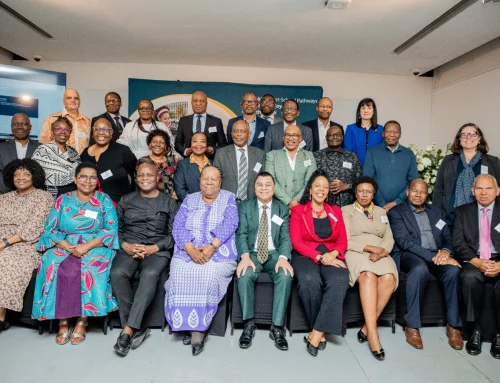
The 55 delegates represented vice-chancellors, deputy vice-chancellors, faculty deans and their deputies, heads of schools and deputies, senior lecturers, lecturers and heads of research. Also in attendance were representatives from private higher education institutions, employers’ associations, First National Bank, the South African Breweries and think tank organisations. Up to 20 public universities were represented.
The Colloquium was themed Navigating the Fourth Industrial Revolution.
Commissioned in 2023 by USAf’s World of Work Strategy Group (WSG), the 4IR Environmental Scan assessed the readiness of South African universities to integrate 4IR technologies into curricula, teaching practices, and workforce development strategies. The scan was conducted in partnership with the University of the Witwatersrand (WITS) School of Business Sciences.
As the Lead Researcher in the 4IR Environmental Scan, Professor Naidoo shared the education and unemployment statistics as part of setting the stage for the study findings and the day’s deliberations.
Alarming education and employment landscape
Opening with a sobering overview of South Africa’s basic education challenges, Professor Naidoo highlighted that 47% of children aged 6–8 do not receive early childhood development (ECD), which contributes to 78% of Grade 4 learners being unable to read for meaning, and 60% of primary school learners failing to reach Grade 12. Unsurprisingly, only 25% of secondary school leavers are considered work-ready, compared to 96% in Singapore.

From this weak foundation, less than 30% of learners attain a bachelor’s pass, with only 18% accessing university, and nearly half of those dropping out. Against a backdrop of 63.9% youth unemployment, Professor Naidoo urged delegates to keep youth top-of-mind when engaging with the 4IR Environmental Scan findings.
This inequitable system, he noted, has created small enclaves of advantaged learners, highlighting an urgent need for curriculum reform that meets the needs of both privileged and marginalised students.
Study scope
In evaluating the readiness of South Africa’s universities to meet the demands of 4IR, the research team examined the national 4IR research landscape to identify key themes, research gaps and institutional best practices. The team also explored strategic responses for preparing graduates for the evolving world of work.
Methodically, the team employed WITS’ 8-step mixed-methods approach (see the diagram below), incorporating a systematic literature review, digital content analysis of university websites, interviews, focus groups, and a survey.

Overall impression
The scan revealed that universities recognise the need to integrate technology into teaching and learning, with growing interest in interdisciplinary approaches. While much attention is given to equipping students with relevant skills, the study underscored the need to also upskill lecturers.
Moving forward, the sector must rethink curriculum design to ensure relevance in a digitised economy, while navigating resource constraints through strategic allocation of limited funding and capacity.
Insights from the literature review

The systematic literature review (SLR) focused on scholarly research output concerning 4IR, especially technology trends and their impact on jobs and skills. They found that much of the research was published in high-quality, peer-reviewed journals, but tended to be predominantly conceptual rather than empirical in approach. “This highlights a gap,” said Professor Naidoo (left). “We need more empirical studies and context-specific case studies exploring, for instance, what’s happening at the University of Johannesburg. Is it working? What can others learn from it?”
Prompted by USAf, the team also assessed the disciplinary spread of 4IR-related research. Findings showed a concentration in education journals, with some contributions in industrial engineering, business technology and other fields, while maintaining a bias in education technology.
The SLR also showed a techno-centric bias in research, with strong emphasis on emerging technology design and adoption, albeit with another strong focus on soft skills.
However, Naidoo cautioned against categorising 4IR as “emerging,” given its established presence. He also encouraged a balance of skills with technology in research, especially considering that most of these articles are in education journals.
In summary, the SLR found that prevailing research in South African higher education institutions conventionally placed 4IR skills in physical, digital and biological technology domains.

The research team extended this model to bring in the social and psychological aspects, emphasising that digital literacy must transcend technical knowledge, especially in the face of poverty and inequality issues confronting South Africa. He went on to present the broad range of technologies that researchers were publishing about, as shared below.

Preparing graduates for a transformed workforce
Referencing the World Economic Forum’s Future of Jobs Report (2018), Professor Naidoo discussed the top 10 priority skills projected to be in demand by 2025. These ranged from complex problem solving, cognitive flexibility, and emotional intelligence, etc.

Mapping the 4IR skills that emerged in South African scholarly publications, the research team categorised skill development into themes such as soft skills (communication skills, social skills, emotional skills) hard technical skills (programming skills), non-technical skills (critical thinking and problem solving skills) digital and ICT skills, leadership and management skills, such as project management skills. Regarding industry-specific skills, the analysis found that scholars published about numeric skills, marketing skills, interpersonal and social skills.

“You can see this is a very complex environment. While there is some alignment between what colleagues think are important skills for development and the WEF priority skills, there were differing views on which skills to prioritise in South Africa.
From a technology point of view, the researchers learned that South African scholars emphasised the importance of digital connectivity, automation and smart systems, data-driven decision-making, customisation and personalisation, decentralisation, sustainability, human technology, collaboration, resilience and adaptability, ethical development and inclusivity.
“These are some of the core themes coming out of the literature review,” the Lead Researcher said.
From this analysis, the research team proposed the KSAD Competency Model, grouping essential competencies into four domains: Knowledge, Skills, Attitudes, and Dispositions, which offer a detailed framework for shaping a future-ready workforce.

Realigning education for national 4IR readiness
Although the literature review demonstrated that 4IR is impacting a wide range of education domains, from basic to higher education, including teacher education, a thematic analysis raised questions of national readiness, “the readiness of our institutions, skills advancement, the challenge of embedding technology in education and then realigning our educational institutions,” Professor Naidoo said.
To improve national readiness, the study report highlights the need to strengthen institutional governance, infrastructure, curriculum content, and pedagogical practices while integrating 4IR technologies and improving funding mechanisms.

While universities are placing growing emphasis on the skills in the right-hand column below (higher-order cognitive skills, entrepreneurial and innovation skills, etc.), they acknowledge that digital education must be mainstreamed across all disciplines, not just in technical fields such as engineering and computer science. Institutions also advocate for embedding soft skills into the curriculum to support interdisciplinary learning and align with the evolving labour market.

What higher education institutions should prioritise
The summaries below outline what scholars are proposing universities should integrate into their curricula and training programmes to effectively respond to 4IR demands.


“The area closest to my heart is project management,” said Professor Naidoo. “We’ve got a lot of great ideas for policy development, but our challenge lies in execution. So, project management skills are probably an area that we’ve got to emphasise a lot more. Equally important are digital literacy and interdisciplinary education, both of which are essential for equipping graduates for a rapidly evolving world of work.”
The policymakers’ perspective
In analysing documents in the policy environment, the researchers did not find much difference between policymakers’ preoccupations and those of academics, in terms of technology and skills development. The only difference, from the policymakers’ perspective, was their added emphasis on technology transfer and disruptive technology.

Further content analysis of the Presidential Commission on the Fourth Industrial Revolution Report (2021) showed a focus on empowering youth, which Professor Naidoo commended, given South Africa’s context. While the Presidential Commission showed concern about the impact of these new technologies, for instance, artificial intelligence, in South Africa, they also paid attention to investment in the 4IR economy, and coordination and regulation. Furthermore, the Commission showed some interest in the implications of the gig economy for labour and business.
Strengths, weaknesses, opportunities and threats
Professor Naidoo highlighted South Africa’s youthful population as one of its greatest assets—yet one undermined by persistently high unemployment rates. While there is notable investment in advanced technologies, research indicates that this progress is not being matched by workforce readiness or the pace of 4IR adoption. Although higher education holds the potential to reskill academics and upskill students, it faces challenges in keeping pace with rapid technological change, the threat of labour displacement through automation, and deepening socio-economic inequalities.

Nonetheless, technology adoption in education presents a valuable opportunity, complemented by the potential of targeted policy interventions and social protection measures, particularly when viewed against the backdrop of South Africa’s stark economic and educational disparities.
About the research team
Professor Naidoo’s team comprised three other investigators (see below), complemented by two students who assisted with the digital content analysis of university websites.

Further insights drawn from the digital content analysis of university websites, interviews, focus group discussions, and the survey, as well as the study recommendations, may be accessed in the full 4IR Environmental Scan report available on the USAf website.
‘Mateboho Green is Universities South Africa’s Manager: Corporate Communications.