Universities South Africa’s guide to strengthening system-to-system partnerships
Universities South Africa (USAf), in collaboration with the International Education Association of South Africa (IEASA), recently published a Position Paper on System-to-System Collaborations – a mode of engagement that is part of what is commonly referred to as the internationalisation of higher education.
The position paper, commissioned by USAf’s Research and Innovation Strategy Group (RISG), focuses on system-to-system collaborations (bilateral partnerships between higher-education systems or networks) and offers guidance on best practices for these linkages.
The goal is to help institutions build equitable and sustainable partnerships by asking questions like “How do we position South Africa and strengthen our system?” and “How do we scale successful initiatives?” In other words, the document is meant to guide universities in collaborating at the system level as part of USAf’s broader effort to bolster the internationalisation of South African higher education.
Strengthening bilateral partnerships
The position paper draws on several case studies and sector insights to show why well-structured system-level partnerships matter. For example, it highlights the success of the South Africa–Japan Universities (SAJU) Forum – a self-funded network linking dozens of universities from both countries. Over time, SAJU has delivered more than 5,000 joint publications with an above-average citation footprint, largely in high-impact applied research. Importantly, SAJU’s projects have engaged many early-career and women scholars (61% were women and over 60% were under the age of 50 in one report). The SAJU Forum is built on a foundation of trust, mutuality, and co-design, which are credited to its success.
This example underlines that system-to-system agreements (backed by government or national agencies) can generate critical mass and resources for research, far beyond what isolated projects achieve.
Building on these lessons, the paper emphasises best practices for new system-level partnerships. It suggests that partnerships should be structured around shared goals and mutual respect, rather than one-way agendas.
South African higher education has gained significantly from participating in various multilateral and bilateral cooperation initiatives, such as key European Union funding programmes like Erasmus+, Horizon Europe, and their predecessors. Many of these initiatives follow a consortium model, where South African universities collaborate with their European counterparts.
Traditionally, South African universities have partnered primarily with institutions in the Global North. However, there is now an increasing emphasis on building partnerships with institutions across Africa and other regions of the Global South, which is in line with the goals and aspirations outlined in key regional and national frameworks.
USAf’s position paper shows that well-crafted bilateral agreements can serve South Africa’s strategic needs by pooling resources, sharing expertise, and broadening opportunities for students and researchers.
RISG and the internationalisation agenda

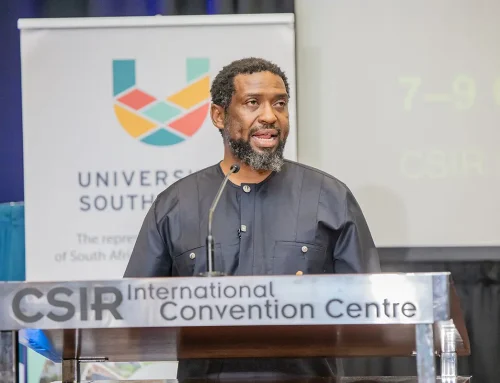
This position paper is a project of USAf’s Research and Innovation Strategy Group. The RISG, chaired by Professor Bernard Nthambeleni (left), determines the annual research and innovation priorities for the public university sector. In this context, the RISG explicitly lists internationalisation as one of its four priority focus areas for 2025, noting that internationalisation “is crucial for South African higher education” because it “fosters global knowledge exchange, enhances research collaboration, and promotes cultural diversity”.
System-level collaborations fit squarely within RISG’s mandate to strengthen the sector’s global engagement. By aligning the paper with the RISG goals, USAf and IEASA signal that supporting bilateral partnerships is a strategic priority for South Africa’s higher-education leadership.
Webinar launch and expert feedback on the paper
On 29 May 2025, USAf hosted a webinar to present the new position paper and gather reactions from sector experts. The online event, chaired by Professor Nthambeleni, featured Dr. Samia Chasi, IEASA’s former Manager: Strategic Initiatives, Partnership Development and Research, and now Head of the Internationalisation and Strategic Partnerships Office at the University of the Witwatersrand, who authored the paper and presented its findings.
Professor Nthambeleni opened the discussion by noting that the questions raised in the paper (on equity, impact and system-strengthening) align closely with RISG’s strategic vision. He emphasised that USAf supports initiatives that help “position South Africa” more strongly in global higher education. In RISG’s view, strengthening the overall system depends on building equal, mutually beneficial international linkages – exactly the aim of the position paper.
Respondents included Professor Aldo Stroebel, Deputy Vice-Chancellor for Research, Innovation and Internationalisation at the University of Mpumalanga; Ms. Anisa Khan, Director of Academic Services at the University of Johannesburg, and Ms. Huba Boshoff, an IEASA Council member..
These senior leaders were invited to reflect directly on the paper’s proposals. We summarise their key inputs below.
- Professor Aldo Stroebel (right) praised the paper’s focus on scaling up collaborations. He pointed to the SAJU example as proof that system-level partnerships can deliver measurable benefits. He said in the context of that network, over 5,000 co-authored papers were produced with significantly higher citation impact than global norms. Stroebel argued that emulating this model could help other collaborations succeed. He urged that such successful frameworks be expanded, and asked: “How do we scale successful initiatives?” — a key question that USAf itself had highlighted in announcing the paper.
For Stroebel, the take-home message was that national planning and support structures are needed if universities are to achieve similarly high impact through teamwork.
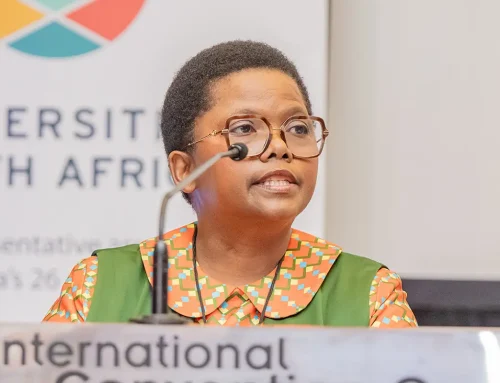
- Ms. Anisa Khan (left) stressed that partnerships must be value-driven. Drawing on her experience at UJ, she said international linkages should align with core institutional values and universal higher-education principles. In her words, collaborations must uphold human rights, respect academic freedom, foster equity and inclusion, and advance intercultural understanding. This perspective reinforced the paper’s theme that equitable partnerships are not just strategic, but ethical. Khan’s contribution highlighted how South African universities are already applying these principles (for example, by formalising joint-degree agreements only when they meet shared quality and equity standards).
- Ms. Huba Boshoff (right) emphasised trust and innovation. As former Director of Nuffic Southern Africa and an internationalisation specialist, she has worked on new collaboration models between Africa and partners like the Netherlands. In the webinar, she noted that lasting partnerships rest on mutual trust and creativity. She cited her organisation’s initiative, The Knowledge Collab, which connects researchers across borders on “the principles of trust, creativity and impact”. Boshoff argued that system-to-system networks must yield concrete impact for all participating parties, and that thinking creatively (for example, joint platforms or consortia) is essential to achieving that. Her comments echoed the paper’s call for innovative, impact-oriented cooperation.
In her concluding remarks, Dr Samia Chasi thanked all respondents for their rich contributions and emphasised that the position paper is intended as a discussion starter. “You’ve highlighted so many ideas that could serve as research questions for us to engage further,” she said.

Dr Chasi (left) acknowledged that while the current position paper departs from a country-to-country lens, greater emphasis on continental and global South collaborations is necessary. She noted recent changes to the SASUF (SA-Swedish University Forum) funding model. “South African members are now making a financial contribution to the network, and this shift signals greater responsibility and shared ownership,” she explained.
She reflected on the complexity of defining “system” in system-to-system collaboration. “Universities are embedded in broader ecosystems that include policy environments, industry, and civil society,” she said. Chasi endorsed the idea of future case studies to examine network- and institutional-level experiences and outcomes.
“We now live in a completely different world, geopolitically speaking. It is affecting our work and the funding we receive,” she noted, stressing the urgency for sustainable planning. She reiterated the need to explore how system-level ambitions translate into operational implementation and invited stakeholders to continue the conversation.
“I’m delighted by the perspectives, suggestions, and calls to action you have shared today. This paper is only the beginning,” Chasi concluded.
Together, the speakers affirmed the insights shared in the position paper. They agreed that South African universities need to take a proactive, strategic approach to internationalisation, focusing on partnerships that are fair, well-planned and value-driven. The webinar made it clear that the sector sees system-level networking as a key tool for achieving those goals.
A practical guide
This paper is a reference tool for the higher education sector. In other words, the paper is intended to be a good-practice guide, not a policy that requires new processes. The document (and the webinar discussion) are meant to spark reflection and information-sharing among universities. Going forward, each institution can draw on the paper’s case studies and recommendations as they see fit.
The new position paper provides a timely blueprint for enhancing the internationalisation of higher education at a system-to-system level. By pooling expertise from the sector and highlighting concrete examples like SAJU and SASUF, the paper equips South African universities with ideas on how to form strong, equitable partnerships worldwide. With the backing of USAf’s RISG and engagement from leaders across the sector, this paper stands ready for institutions to use to strengthen their global partnerships.
Mduduzi Mbiza is a commissioned writer for Universities South Africa.