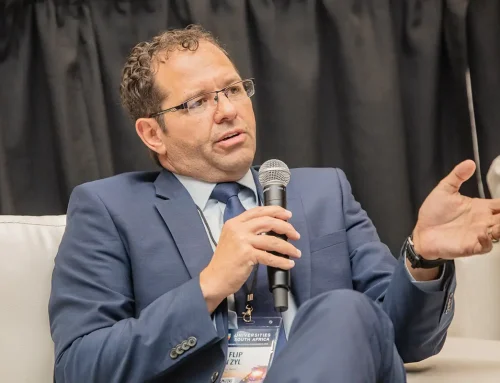
USAf and IBM partner to strengthen AI capacity across South African universities
Universities South Africa (USAf) entered into a strategic partnership with International Business Machines (IBM) Corporation aimed at developing a coordinated approach to artificial intelligence (AI) adoption and capacity development across South Africa’s universities.
The partnership forms part of an IBM-supported accelerator programme backed by an estimated R8 million grant, in kind. It is designed to move the sector beyond fragmented, institution-level experimentation towards a more structured and sustainable model of digital transformation. The engagement between USAf and IBM dates back to 2024.
The project intent

During her project update to the USAf Board of Directors on 17 March 2026, Dr Sibusisiwe Makhanya (left), a Senior Research Manager at IBM Research Africa, said the project objective is to help USAf develop a roadmap to strengthen the sector in AI, both in adoption and long-term capability. This includes strengthening institutional efficiency across teaching, learning, research, and administration, while also building the skills required to engage with current and emerging technologies.
The project is being delivered in two phases. Phase One, Design for AI, entails a comprehensive gap analysis, including a sector-wide survey to understand the prevalence of AI use at universities for a clearer, evidence-based view of institutional readiness. The survey ran from July to November 2025, concluding with responses from 23 out of 26 universities, with the last three submitting responses soon thereafter.
Dr Makhanya presented the survey as the project foundation, providing a shared understanding of sector readiness for AI adoption.
Key survey findings
Survey findings confirmed that most institutions remain in the early stages of AI adoption. While there is widespread experimentation, particularly in teaching and learning, only a small number of universities report more advanced levels of integration.
The findings also showed that most universities’ adoption of AI remains at a pilot level, relying largely on guidelines or draft policies rather than fully institutionalised frameworks. Due to the dynamic nature of technological developments, several institutions have expressed a preference for flexible guidelines rather than rigid policies requiring constant updates.
Although few universities have adopted enforceable frameworks, none reported banning AI, indicating a general openness to adoption despite ongoing concerns.
Among the most prominent concerns identified are academic integrity, particularly in relation to plagiarism and misuse, as well as data privacy and the potential for AI to deepen existing inequalities between institutions. At the same time, universities identified clear opportunities for AI to support research acceleration, enhance teaching and learning, improve student support, and increase administrative efficiency.
These findings pointed to the need to move beyond basic uses of AI tools. Current usage, Dr Makhanya noted, remains largely limited to functions such as “summarisation [and] search,” with relatively little application in more advanced/complex tasks.
A sector at a turning point
While institutions are actively exploring the use of AI in teaching, learning, and research, this uptake is not yet coordinated at a sector level, raising concerns around academic integrity, data privacy, and unequal access to digital tools.
From a USAf perspective, this presents both a risk and an opportunity. As the representative body of the country’s 26 public universities, USAf plays a central role in enabling alignment across the sector and supporting coordinated responses to emerging challenges.
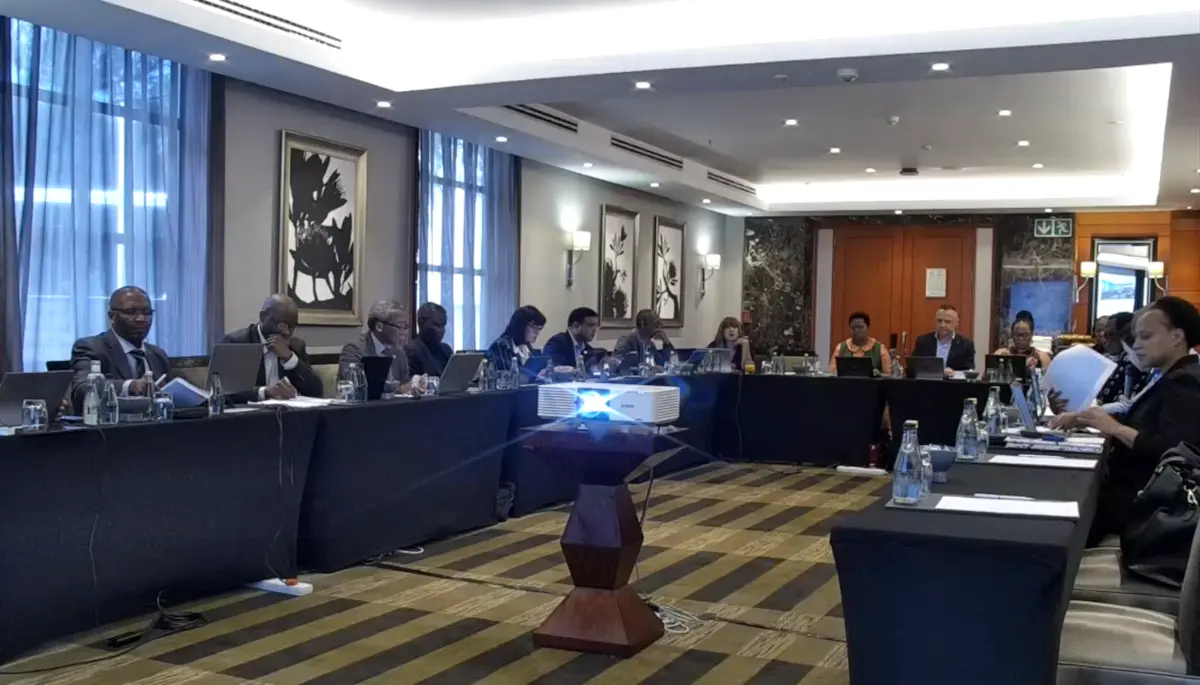
Most universities were represented at the Board of Directors’ meeting in Gauteng on 17 March 2026. The Directors welcomed the IBM presentation and look forward to seeing this project unfold.
Next Steps
With the sector readiness now determined, the consultative segment of Phase One is underway, having started on 1 December 2025 and is expected to run until 30 November 2026. During this Design for AI phase, IBM and USAf will convene facilitated workshops using the Garage methodology. These sessions will bring together institutional representatives to co-develop a roadmap that sets out operational and technical recommendations. The intention is to have an instrument that enables universities to shift from isolated experimentation to a coherent, long-term model when it comes to the adoption of AI.
By the conclusion of this period, universities should have a consolidated plan for AI adoption, strengthened governance frameworks, and clearer pathways for responsible use.
This will lead to capacity development in Phase Two, to be rolled out through IBM’s SkillsBuild programme. According to Lead Project Coordinator, Ms Chana de Vries, institutions will begin engaging with IBM’s SkillsBuild platform, which offers more than 1000 courses and certifications in AI, data science, and digital innovation. This resource is designed to build capacity at scale, enabling staff and students to strengthen their skill pipelines while embedding knowledge within universities. Participants will also gain practical skills in areas such as design thinking, AI application, and digital innovation.
Meanwhile, IBM’s SkillsBuild platform will be made available as a free edtech resource, enabling self-paced learning, project-based content, and certification opportunities.
Importantly, capacity building will remain a continuing priority beyond the project’s formal conclusion, ensuring the durability of impact. Through SkillsBuild and embedded institutional ownership, universities will continue to deepen their capabilities well into the future, positioning the sector for sustained transformation across teaching, research, and administration.
Sustainable capability
The partnership emphasises sustainability alongside capacity development. Rather than introducing a single technology solution, the initiative focuses on building the knowledge and skills required for long-term adoption.
During her project update to the USAf Board, Dr Makhanya emphasised that “the project custodianship, ownership and outcome rests on the sector, and not IBM.”
Leveraging global expertise for local impact
The partnership draws on IBM’s global network of expertise, including specialists in AI, data science, consulting, and digital transformation, and is supported by regional leadership and local research capabilities, such as the IBM Research Lab in Johannesburg.
This collaboration positions the initiative as both a national intervention and part of a broader global effort to strengthen AI capability in global higher education.
Looking ahead, the project is expected to expand engagement across the sector, with plans to share progress and insights through platforms such as workshops and potentially a dedicated conference aligned to USAf’s broader programme of work.
By aligning institutional efforts, strengthening policy and governance frameworks, and investing in skills development, the initiative aims to equip South Africa’s higher education sector not only to respond meaningfully to technological change but to actively enhance its impact on teaching, research, and society.
Thoriso Kolobe is a Digital Communication Consultant commissioned by Universities South Africa.