What researchers need to know about Open Access publishing, but are afraid to ask
On 30 October 2025, leading voices in scholarly publishing, research funding, and open scholarship practice enlightened southern African scholars on Everything researchers need to know about publishing free open access but are afraid to ask. This was at a webinar hosted by the Community of Practice for Postgraduate Education and Scholarship (CoP PGES), of Universities SA.

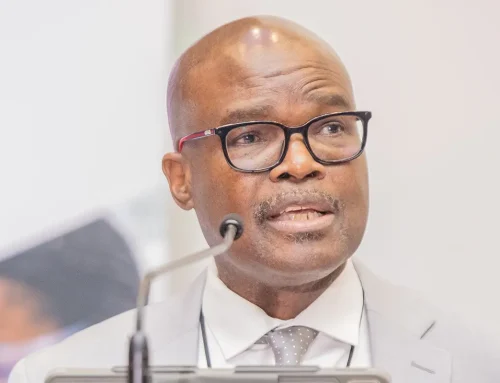
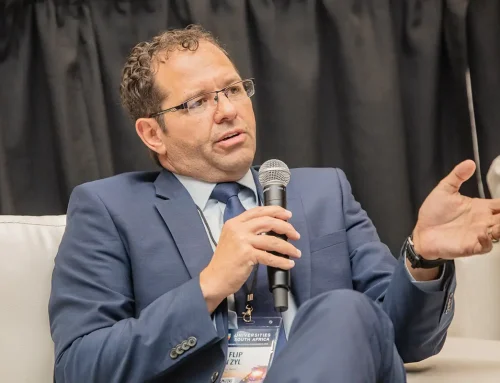
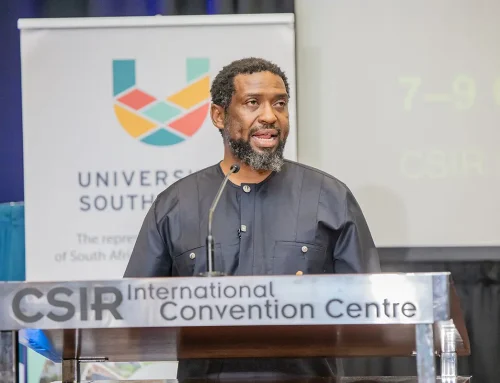
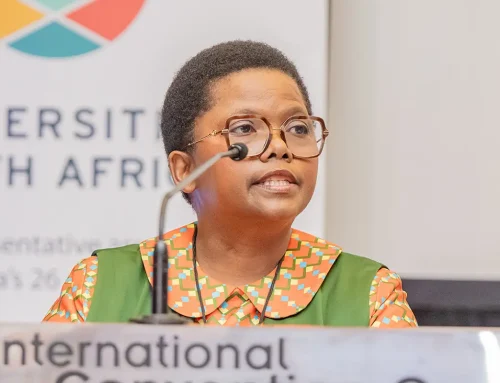
Two primary speakers, Mr Glenn Truran, Director of the South African National Library and Information Consortium (SANLiC), and Dr Nokuthula Mchunu, Manager of International Collaborative Research Grants at the National Research Foundation (NRF), spoke on how transformative agreements, shifting funding models, and evolving research assessment practices are reshaping publishing in South Africa. Dr Leti Kleyn, former manager of the Open Scholarship Office at the University of Pretoria (UP), responded to these inputs, drawing on years of experience implementing open scholarship initiatives.
The rationale
Open Access publishing is a good idea and the preferable approach for many reasons. It enables wider readership and allows the public to access knowledge that has been publicly funded. This approach also helps under-resourced individuals and institutions to access scholarly information, and it prevents profiteering by ensuring that authors do not have to surrender their copyright to publishers.
Publishing reform has become urgent worldwide in higher education. While South Africa has made remarkable progress in transitioning research outputs to Open Access, from approximately 75% closed access in 2000 to 32% in 2024, significant barriers remain: prohibitive author fees, unfavourable foreign-currency exchange rates, publisher paywalls that still restrict access to roughly half of all globally published research, and an academic incentive system that prioritises high-impact journal publication over societal impact and knowledge accessibility.
Compounding these challenges are the conflicting expectations of postgraduate students, early-career researchers, and supervisors. Whereas universities reward traditional journal-based publishing and funders increasingly demand research outcomes and innovation, institutions worry about intellectual property ownership, while supervisors must navigate outdated incentive structures. Meanwhile, publishing costs, in hard currency and in researcher time, fall unevenly on institutions and nations with limited purchasing power.
The webinar aimed to demystify publishing in the Open-Access era, surface practical pathways for South African researchers, and help research supervisors understand how to best guide their students toward responsible, accessible, and sustainable publishing practices.
Target audience
This webinar addressed supervisors, early-career and established researchers, postgraduate students, librarians, research managers, and anyone involved in guiding or supporting scholarly publishing decisions.
In the context of the conflicting expectations referred to above, Professor Stephanie Burton (right), Programme Leader of the CoP PGES and meeting facilitator, posed this question about educators: “What should we be telling our postgraduate students about publishing? They have expectations from various angles…. And everybody is asking: who budgets for and pays for article page charges?”
The webinar provided concrete answers grounded in institutional practice, policy development and lived experience.

The SANLiC perspective
Mr Glenn Truran opened by contextualising the problem. The current scholarly publishing system is not fit for purpose. Born out of commercial arrangements that date back decades, when Elsevier and other publishers convinced academia to cede copyright ownership in exchange for distribution, the subscription model has created a global inequity: institutions in wealthy nations access more published research, yet the world funds the dissemination of research output from the most powerful nations, many of which restrict access through paywalls.
He said South Africa’s journey toward openness has been steep but uneven. United States publishers keep 51% of their content behind paywalls; China is even worse. Yet, through coordinated action by SANLiC and its member institutions, South Africa has achieved an Open-Access trajectory that now includes 16 read-and-publish (transformative) agreements covering more than 80% of the research output of South African institutions.
On read-and-publish agreements, Truran explained that they combine the costs of reading and publishing into a single, negotiated contract. Instead of paying subscriptions to read and then charging authors for article processing (APCs) to publish Open Access, institutions pay once, and authors can publish full and immediate Open Access without surrendering copyright or incurring author-facing charges.

Truran (left) said in 2024 alone, SANLiC’s agreements saved South African researchers over R300 million in publishing costs that would have otherwise been charged as Open-Access fees. Publishers such as Springer and Taylor & Francis experienced a significant shift: by 2024, most South African research published through these channels would be immediately Open Access rather than paywalled. Moreover, research demonstrates that authors benefit materially: Open-Access articles receive 70% more exposure, 50% more citations, and 19% higher altmetric scores compared to paywalled publications.
However, significant challenges persist. First, more than 98% of both reading access and publishing charges occur in foreign currency. South Africa has lost 95% of its purchasing power against the US dollar since the early 1980s, and 26% in the past decade alone, making even “free” publishing through agreements a cost-of-living crisis for developing-nation institutions. Secondly, some publishers have misused Creative Commons licensing (such as CC-BY-NC or CC-BY-ND) to obscure their retention of copyright, allowing them to resell authors’ content to large language models and other commercial interests, thereby undercutting the promise of true Open Access.
The message to researchers was clear: wherever possible, insist on CC-BY licensing to retain maximum reuse rights and prevent publishers from exploiting your work.
Provision has been made through sixteen SANLiC publisher agreements for South African researchers to publish full and immediate Open Access in hybrid journals without any author-facing fee and without having to surrender copyright to publishers. Some fully open (Gold) journals are also included with a full waiver or discounted APC rate.
The NRF Perspective: Reframing Why We Research and Publish
Dr Nokuthula Mchunu (right) offered a complementary but provocative lens. She began with a fundamental question: Why do we do research?
She invited participants to pause and reflect. Is the goal to become famous, as one colleague suggested? Or is it to solve a societal problem, improve human wellbeing, inform policy or generate innovation? When Mchunu entered postgraduate studies, she emphasised, the aim was to “definitely solve a societal problem.”
Yet the publishing system, as currently structured, often divorces research from impact. The cost burden is real: a median author processing charge of approximately $2,500 USD, equivalent to 40,000–50,000 South African Rand, is not merely a publication fee. It is money that was already spent to fund the research itself. For postgraduate students receiving scholarships, it represents a second extraction from already-constrained resources. Between 2019 and 2023, the scientific community paid $10 billion solely to publish Open-Access research knowledge that researchers had already funded to produce.

This raises a more challenging question: Does publishing in large subscription or hybrid journals, even when “free” through institutional deals, actually address the problems researchers set out to solve? Or does it default to a model designed for peer-to-peer validation rather than societal benefit?
The NRF, Mchunu explained, is piloting a new impact assessment framework. Rather than measuring impact through post-hoc citation counts, the NRF now focuses on intended societal outcomes and stakeholder engagement from the funding outset. Reviewers evaluate proposals based on content and context relevance, not track records. This shift reframes research as inherently accountable to the communities and problems it claims to address.
Alongside formal publication, she championed broader science communication: social media, policy briefs, lay summaries and community-facing formats that disseminate knowledge openly without paywalls or institutional barriers. The beauty of this expanded view, Mchunu argued, is that knowledge becomes available to everyone at no cost and requires no additional extraction of researcher resources.
Open Scholarship in Practice: Lessons from the University of Pretoria

Dr Leti Kleyn (left), responding to these two perspectives, grounded the discussion in institutional practice. She emphasised that open scholarship is not a future aspiration but an operational reality that requires sustained commitment from supervisors, librarians, researchers, and institutional leaders.
The challenge lies not in understanding the principle that knowledge created through public funding should be publicly accessible, but in navigating the complex reality of incentives, copyright agreements, cost-sharing models, and stakeholder buy-in. Kleyn highlighted that supervisors remain crucial change agents. Many supervisors, themselves shaped by citation-centric academic cultures, may undervalue or actively discourage non-traditional forms of knowledge communication. Yet supervisors who model engagement with Open-Access platforms, communicate findings to lay audiences and mentor students in diverse publication pathways can shift institutional norms.
She also noted that institutions in the Global South face particular pressures. Paywalls disproportionately restrict access in regions with limited purchasing power, yet the incentive structures linking promotion and funding to publication in high-impact journals, often paywalled and published in the Global North, remain entrenched. Transformation requires not only agreements like those SANLiC has brokered but also deliberate rewiring of how universities recognise and reward research output.
Key takeaways for supervisors and students
Several concrete principles emerged for postgraduate educators and students.
On publishing pathways: Researchers eligible for SANLiC read-and-publish agreements should take full advantage of them. More than 80% of the hybrid journals in which South African authors typically publish are now venues for free, immediate Open-Access publication. This is true for publishing in both subscription/hybrid journals (through the agreements) and fully Open-Access venues. Supervisors can direct students to their institutional library or the SANLiC website to check eligibility and options.
On copyright and licensing: Where choice exists, authors should insist on CC-BY licensing to retain maximum reuse rights and prevent publishers from exploiting their work. The legalese surrounding copyright can be opaque; supervisors should help students navigate it and escalate concerns to their institutions or SANLiC. CC BY licenses are preferred over other licensing versions. Some publishers try to get authors to sign over their copyright with CC BY-NC and CC BY-NC-ND. It is advisable to avoid these options. Choosing CC BY ensures that authors retain maximum reuse rights and prevents publishers from exploiting their work.
On defining impact: Impact encompasses far more than citation counts or journal prestige. Real-world change, policy adoption, community engagement and stakeholder feedback are equally valid measures. Supervisors should encourage students to consider how their research reaches and benefits the intended audiences, not just academic peers.
On rethinking the “publish or perish” culture: While publication remains important, the incentive system that prioritises quantity of publications and journal impact factors over quality, innovation and societal benefit is counterproductive. Institutions, funders and supervisors must collectively shift how they recognise research excellence. The NRF’s new impact framework and SANLiC’s push toward transformative agreements are steps in this direction, but cultural change requires deliberate modelling and policy reform at the institutional and sectoral level.
On diversity in knowledge communication: Researchers should communicate their findings through multiple channels, including peer-reviewed journals, policy briefs, infographics, podcasts, blogs, and community forums. This multi-platform approach accelerates impact and ensures knowledge reaches those with the capacity to act on it, not only other researchers.
The 30 October 2025 illustrated that the infrastructure for open, equitable publishing exists through initiatives like SANLiC. The policy frameworks are also evolving, especially with the NRF reorienting institutions toward impact-driven assessment. Institutions are increasingly showing openness to change.
Yet the transformation depends on supervisors, researchers and students making conscious choices for a) publishers who respect author rights, b) Open-Access venues even when paywalled options carry prestige, c) to communicate research findings beyond journal articles, and d) to define research success not by a journal’s impact factor but by the real-world problems addressed, and the knowledge genuinely made accessible to those who need it.
Supervisors are uniquely positioned to model and mentor these choices, shaping a new generation of researchers who understand that knowledge should not be a privilege, but a benefit for humanity.
For researchers seeking to publish Open Access at no cost, the SANLiC website is an essential resource. It provides a comprehensive overview of all current agreements negotiated by SANLiC, enabling South African researchers to publish full and immediate Open Access in hybrid journals without any author-facing charges (APCs) in most cases, and at a discount in some fully Open Access journals. To stay informed about new opportunities and updates, researchers are encouraged to follow SANLiC on LinkedIn and @SANLiCNews for the latest news and guidance on open access publishing.
Mduduzi Mbiza is a contracted writer for Universities South Africa.