When AI checks AI, who takes responsibility? Universities confront the credibility test
At the fourth USAf Higher Education Conference, an argument about the future of the lawyer collided with a warning that technological progress must not deepen scarcity, exclusion, or the erosion of human purpose.
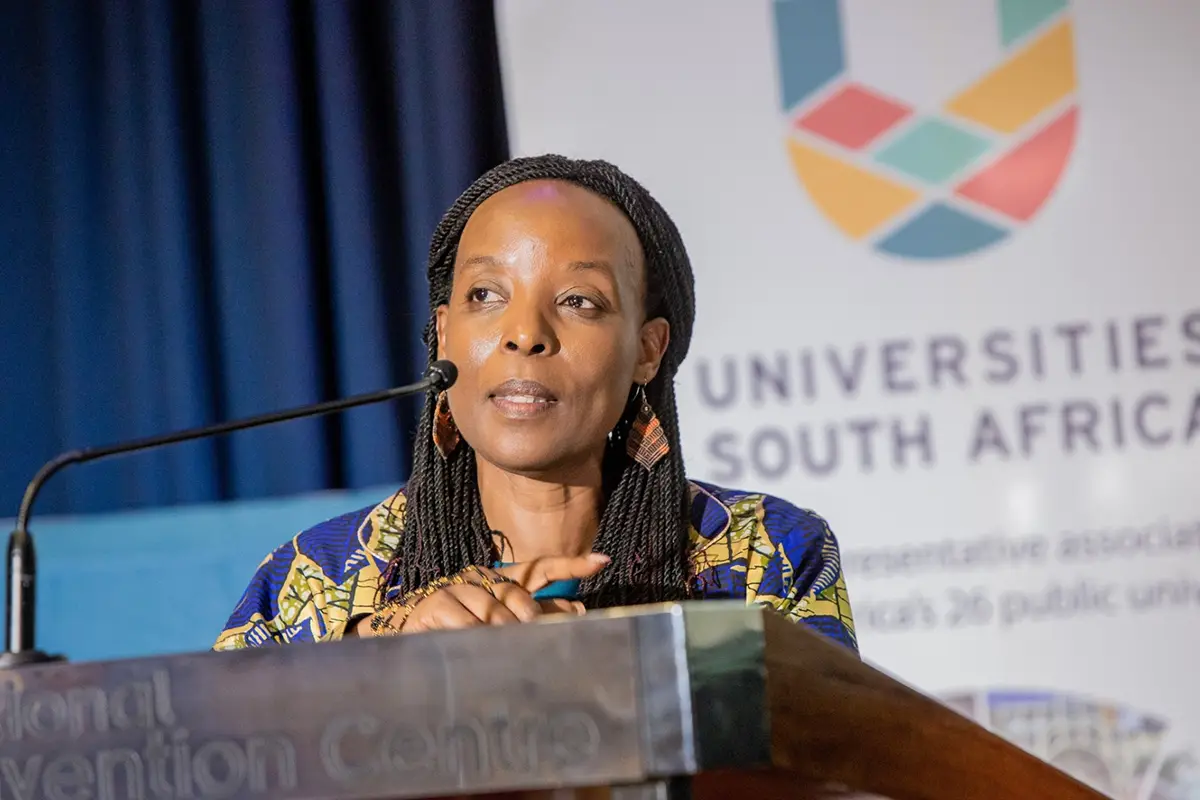
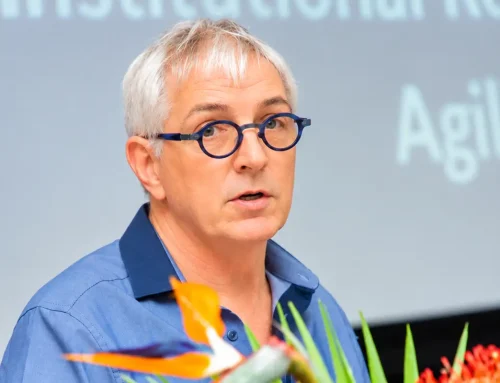
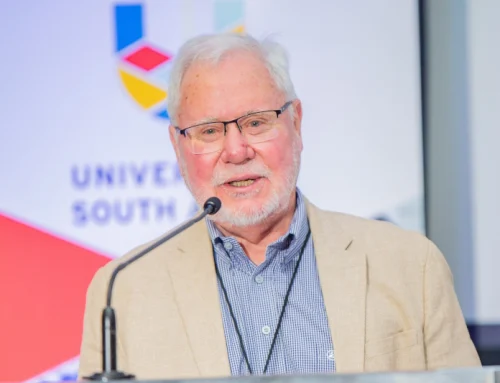
Professor Sibusiso Moyo, Deputy Vice-Chancellor: Research, Innovation and Internationalisation at Stellenbosch University, chaired Parallel Session 1B, “Academic Futures, Credibility, Disruption and Continuity in an AI-mediated World”, at the fourth Universities South Africa Higher Education Conference, CSIR International Convention Centre, Pretoria, 7 October 2026.
The lawyer of the future may no longer research every case, draft every argument, or personally verify every citation. Artificial intelligence (AI) systems could handle all three tasks, with independent AI agents scrutinising the work of other agents. Yet someone must still answer to the court when the outcome is wrong. Who should that person be, and what must universities teach them?
That uncomfortable question animated a discussion on Wednesday, 7 October 2026, Day One: Understanding the Present, at the 4th Universities South Africa (USAf) Higher Education Conference. Held from 7 to 9 October 2026 at the Council for Scientific and Industrial Research (CSIR) International Convention Centre in Pretoria, the conference was themed “Co-Creating a Resilient Future”. At the opening, USAf Chief Executive Officer Dr Phethiwe Matutu set out the ambition to help shape a future in the service of society.
The session, “Academic Futures, Credibility, Disruption and Continuity in an AI-mediated World”, brought together Professor Lisa-Dionne Morris of the University of Leeds, speaking online, and Professor Donrich Thaldar of the University of KwaZulu-Natal. Professor Sibusiso Moyo, Stellenbosch University’s Deputy Vice-Chancellor for Research, Innovation and Internationalisation, chaired the discussion. Their competing emphases raised a question that extends well beyond law: can universities accelerate their adoption of AI while protecting intellectual independence, professional accountability, and access for those with the fewest resources?
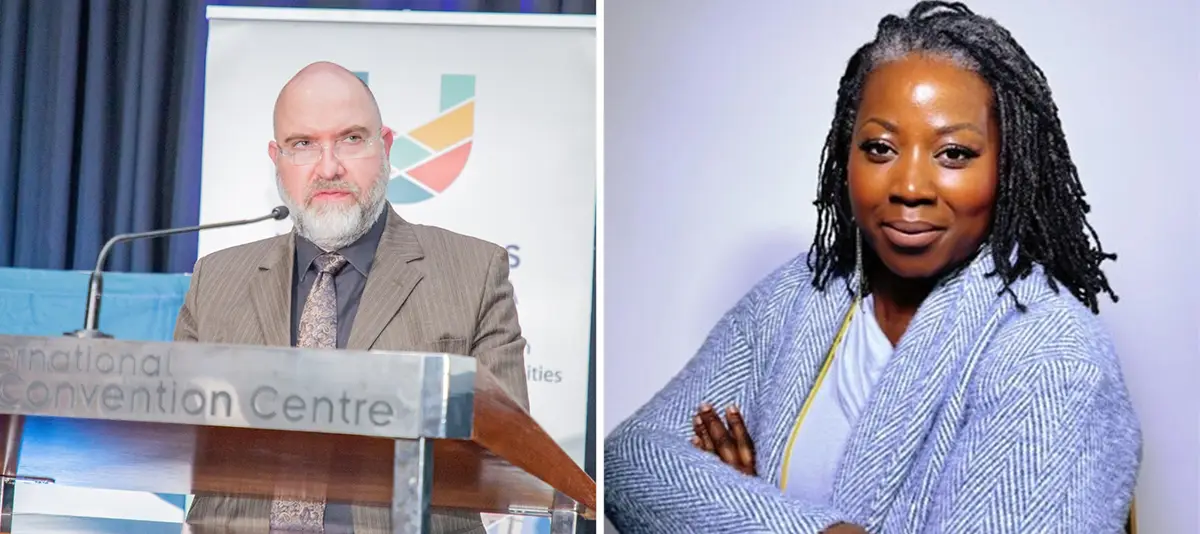
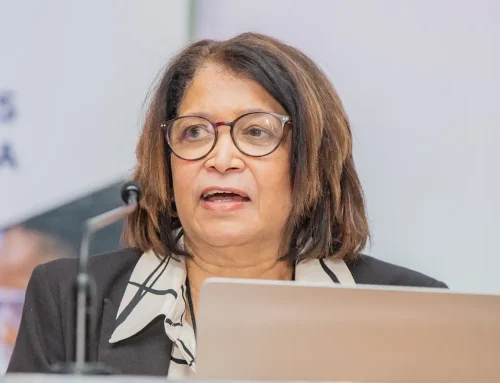
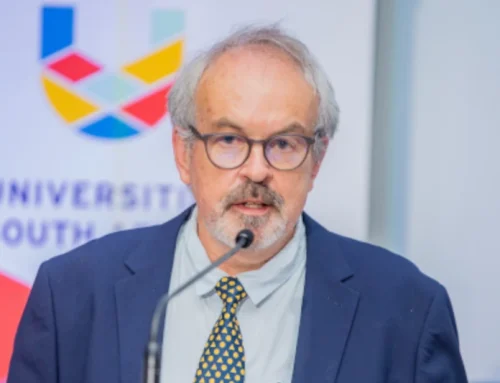
Professor Donrich Thaldar (left), Professor of Law at the University of KwaZulu-Natal, and Professor Lisa-Dionne Morris (right), University of Leeds, contributed to the Academic Futures session on credibility, disruption and continuity in an AI-mediated world. Professor Morris participated online; her image is a separate portrait, not a photograph of her conference presentation. USAf 4th Higher Education Conference, 7 October 2026, Pretoria.
The machine as author and auditor
Professor Thaldar challenged what he termed the verification paradigm: the expectation that a lawyer may use AI to prepare material, provided a human independently checks every result. He argued that this model is already out of date: AI systems can now examine and test work produced by other AI systems. More fundamentally, he argued, verification requires more knowledge than the thing being verified. A junior lawyer cannot verify an AI that knows more law than he does, so the verification paradigm asks him to do the one thing he is least able to do.
He described using AI to draft documents and then instructing fresh agents, separate from the drafting process, to check the results. Errors could be corrected and further reviews undertaken through successive rounds. By the fourth or fifth round, he said, the audit usually comes back clean. The AI is thus both author and auditor, and the lawyer becomes the orchestrator rather than the verifier. Professor Thaldar did not suggest that this removes the practitioner’s duty to the court. His proposal was that the duty be reformulated: from personally verifying every line to reasonable reliance on a sound process.
Professor Thaldar cited Microsoft research on the AI Diagnostic Orchestrator, a system that coordinates diagnostic reasoning, testing and review. Microsoft reported that its best configuration correctly resolved 85.5% of a benchmark of complex published medical cases, compared with an average of 20% for 21 physicians assessed under the study conditions. He himself cautioned that these were complex teaching cases rather than routine clinical work, and that the physicians worked without colleagues, textbooks or AI. His point was about the design: the breakthrough came not from a single, smarter model but from AI agents checking other AI agents. The checking, as he put it, had moved inside the machine.
The legal risks are not hypothetical. In the 2025 KwaZulu-Natal High Court judgment in Mavundla v MEC: Department of Co-operative Government and Traditional Affairs, non-existent authorities were cited during legal proceedings. The court criticised unverified legal research and referred its judgment to the Legal Practice Council for investigation. Professor Thaldar read the case differently from the usual warning against AI. The failure in Mavundla, he argued, was not too little human reading but the absence of any verification process at all. A single model asked to vouch for its own work is a poor witness; a team of independent auditors sent back to the actual sources is a different thing altogether. He agreed with the court that lawyers must bring an independent, questioning mind to their work, but suggested that the object of that questioning mind is moving from the citation to the process.
What remains for a human lawyer?
His proposed answer was a “residual lawyer” responsible for orchestration, advocacy and accountability. Lawyers would need to know how to direct an AI process, organise genuinely independent audits, test the facts with clients and explain why reliance on the resulting work was reasonable. They would also still have to argue cases and answer for signed documents before courts, clients and professional bodies.
Professor Thaldar’s proposed shift placed professional credibility in a lawyer’s willingness and ability to answer for work produced through an AI-supported process, rather than in personally drafting every component. If a lawyer signs a document he is unable to assess, he warned, his responsibility becomes a fiction, and fictions are what destroy credibility. That was a proposal about the profession’s possible future, not a statement of the present legal standard. He drew an analogy with directors’ reasonable reliance on competent professional advice under section 76 of the Companies Act.
For law faculties, the implications would be substantial. Rather than rewarding students chiefly for memorising extensive lists of cases, Professor Thaldar proposed a stronger grasp of legal principles, an understanding of how different fields of law interact, and the development of practical skills in consultation and advocacy. Clients present interconnected problems, not neatly classified legal modules. In this account, graduates would need to direct technological tools effectively while retaining competence to respond to a judge’s unexpected question.
He also acknowledged a distributional danger: access to the most capable AI systems could confer a decisive advantage. If high-quality legal representation depends on expensive technology, access to justice could become even more unequal. In his words, the rule risks becoming “he with the best AI will win”.
Scarcity is not a licence to cut.
Professor Morris approached the same technological future through institutional design and what she termed frugal flourishing. She distinguished scarcity from austerity, arguing that limitations should prompt deliberate redesign rather than reflexive cuts. Restricted funding, staff or infrastructure do not automatically produce innovation; institutions must decide how to use available capabilities while protecting quality and inclusion.
Her approach emphasised achieving more with limited resources without sacrificing the elements that make higher education valuable. It begins with the knowledge, skills, resources and attributes already present in an institution, rather than defining people principally by what they lack. AI should strengthen judgement, creativity, agency and service, not merely reduce staffing requirements.
Professor Morris set out four leadership approaches: innovate by creating new possibilities; improvise by recombining what exists; imitate proven approaches that fit local conditions; and exercise intuition informed by evidence and lived experience. She cited examples from African institutions involving industry partnerships, repurposed laboratory resources, and locally adapted open educational materials. None required universities to mistake imitation for copying without regard to context.
The framework also depends on systems thinking. The visible gains from new technology — faster processing, more services and lower operating costs — mean little if institutions neglect governance, staff capacity, feedback or the people affected by their decisions. Professor Morris distinguished among end users, those directly affected and others who bear indirect consequences. Effective design must consider all three.
Her engagement with decolonial theory added a further dimension to the argument. Local knowledge, cultural experience and differing ways of understanding the world, she argued, must inform which technologies are appropriate and whose purposes they serve. Otherwise, universities risk importing systems that appear efficient while reinforcing power imbalances and excluding those whose knowledge has historically been marginalised. The issue is epistemic justice as well as technical performance.
The people and costs behind the technology
The audience refused to treat AI adoption as an uncomplicated advance. Participants raised concerns about psychological dependence on chatbots, student anxiety, staff feeling professionally inadequate, existential risks, data governance and the electricity, water and carbon costs associated with computing infrastructure. One participant also questioned whether current levels of investment in AI could be sustained if the market were to undergo a sharp correction.
Professor Morris urged institutions to establish who was exposed to harm, what might be lost through technological change and which people would bear the earliest consequences. Only after identifying those risks, she argued, could universities determine what needed to be redesigned.
Professor Thaldar insisted that his argument concerned legal education rather than the full range of social consequences of AI. He warned that students trained without specialist AI could enter practice at a serious disadvantage. He went further, suggesting that failure to use appropriate technology might eventually become professionally difficult to defend. These were predictions, not an account of existing ethical obligations.
Professor Moyo pressed the speakers on the financial and institutional consequences of their proposals. If better systems confer advantages, what should universities do to guarantee equitable access for students and staff? She also returned to the environmental burden of AI infrastructure and the necessity of partnerships, governance and public accountability.
Professor Thaldar responded that universities must budget for appropriate tools and actively investigate offers of institutional access. Professor Morris argued for faster, context-sensitive decisions through her four leadership approaches, rather than prolonged discussions that delay action. Neither answer removed the difficult question of how universities with vastly unequal resources could secure comparable technological opportunity.
What universities must preserve
The debate ultimately exposed two risks that are often discussed separately. Universities could move too slowly, producing graduates without the capabilities their professions increasingly require. Or they could move too quickly, allowing commercial technologies to dictate educational priorities while obscuring who is accountable and who is excluded.
Professor Morris concluded that adaptability, critical thinking, evidence-based judgement and effective use of AI would matter alongside relationships, creativity and human purpose. Professor Thaldar left his audience with a more unsettling question. Advocacy, he observed, exists only because the judge is human: we argue in person because a person must be persuaded. If we worry that human advocates win by rhetoric and that human judges are fallible, then the case against the human advocate and the case against the human judge are the same case. For now, he concluded, lawyers should be trained to be the person who answers for the result and stands up in court to argue it. How long that remains true depends on whether we still want a human judge.
For South African universities, the immediate task is more concrete. Institutional leaders must decide which capabilities to teach, what forms of AI use can be defended, how to ensure fair access and how to make technological decisions answerable to the public. The test of resilience is not whether universities acquire the latest systems, but whether the people they educate retain the understanding, power and responsibility to govern their use.
Bhekisisa Mncube is a contract writer for Universities South Africa.